Copied with permission from Alex Tsui, Muay Thai historian: Alex Tsui's Facebook
The Unforgiving Kicks, part 26 of 27
The Unforgiving Kicks Part 26 - World at War
2 November 2026 · by Alex Tsui
Written by Alex Tsui, a long-form series of articles on the great kickers of Muay Thai history
End of the Ring Genius or Interlude to New Heights ?
To the author, the 90’s represented a very tasteful change of scenario, the days when muaythai was supremely dominant over other fighting arts were beginning to fade away, as the western nations, in the incredible strength and boundless energy of the great pioneers in Europe, the likes of Master Toddy, Thom Harinck, Roger Paschy and Patrick Brizon, who had really found belief in the fighting culture of the Thais. Other masters such as Frenchman Gerald Finot, naturalized American-Thai Chai Sirisutr, in association with the fabulous Dan Inosanto ( master of Jeetkundo & other Asian arts), and the charismatic Alex Gong (half-Chinese), were pushing in separate ways in the United States, as was Philip Lam (Chinese) who led the greenfield in the detached world from down under Australia and New Zealand.
1990 was, in particular a landmark year, when over- twenty muaythai shows, of premier quality at the time, literally erupted in the major cities across five continents, in Paris, Amsterdam, Tokyo, London, Auckland, Tulsa, Phoenix, Sidney, Manchester, and Duisburg... not to mention Thailand’s own Chiang Mai and Bangkok, the holy mecca of kickboxing.
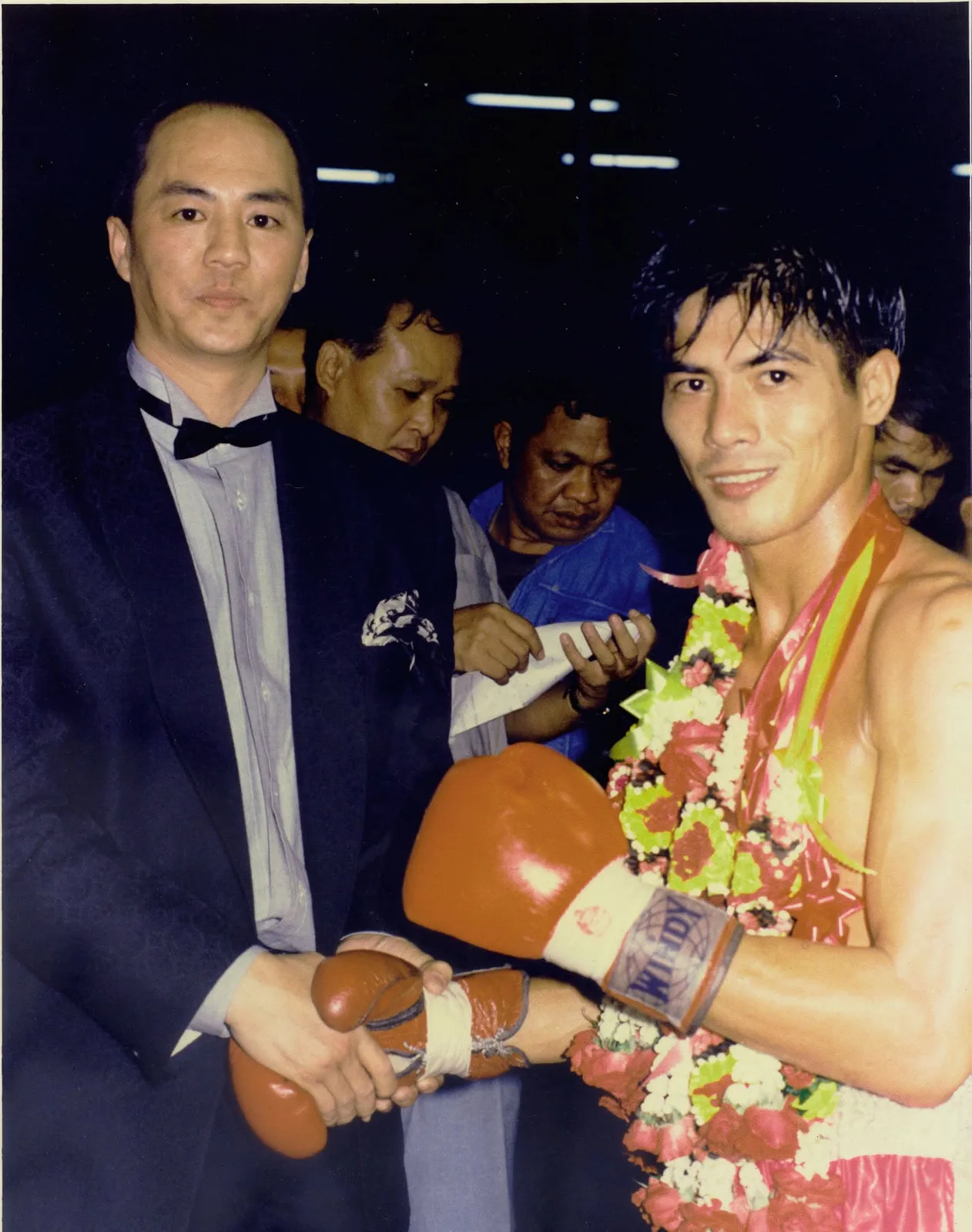
The one question all wondered about was : had we seen the end the great Samart Payakarun yet ? The arguably most talented Thai fighter, after achieving once again Fighter of the Year status in 1988, climaxing in the one-round (2:02) kayo of featherweight top tactician Cherernthong on 6 January, 1989, was the undisputed Yodmuaythai since. That was yet another defining moment in the glamorous career of the Ring Genius. Four months hence, when he stepped into the ring again, to face the red-hot challenger in Wangchannoi S. Palangchai, who had in an impressive winning streak, disposed of the Top Fighter yearly award winners of the previous five years, to qualify the showdown in the super fight of the year.
It was the young, uncompromising, fistic artist, nicknamed “Flash-33” for destruction of a rival talent star, Namkhabuan, with a volley of combination punches – his most potent weaponry - in 0:33 of round one. It was the setting of the deadly spitfire puncher, versus the radar-sharp kicker-spurner, the most complete muaythai artist the kingdom had seen in decades.
Can the “Phrakarn of Lawo”(Famine God of Lopburi) topple the greatest muaythai stylist of the 80’s in this showdown ? That was the question all fans desired to seek an answer on Tuesday, 2 May, 1989…..
A huge audience estimated at over 10,000 gathered at Lumpini arena to watch their hero Samart (26) entering the ring as a 3-1 favourite against the determined challenger to his Yodmuaythai title, Wanchannoi S. Palangchai (22). The fight was set at 130 pounds, notably higher than that of either fighter at peak form. Height wise, they were almost even, with Samart at 1.72, and WCN, 1.70 m.
Fight time, Samart started as the favourite, by a wide margin, at 7-1. He was the darling of the nation, no wonder.
For the first two rounds, It was, as usual, his one-man show, where he, fighting from a conventional pose (left-lead) landed, intermittently, four low leg kicks that hurt his foe, as he slipped away almost effortlessly from the deadly volleys from the challenger. In the second, he landed five middle kicks, whilst deftly avoiding all the counter blows at him. His elbow-cum-knee variety show continued – after cutting WCN with a baited interception elbow that drew blood from a cut above the right eye. It was clever boxing, and the Genius was all smiles at the gong. The odds remained on his side, at 6 or 7 – 1.
Round three was one leg-work contest, WCN’s right against Samart’s left. Samart, in flamboyant style, evaded all the assaults and then made play with a reverse elbow up (right) at his rival – it was pure class. When the round ended, the two again acknowledged each other, but this time, the handsome man’s smile was not so natural. Yet, the gambling odds were still at 3-2 or 2-1, in his favour.
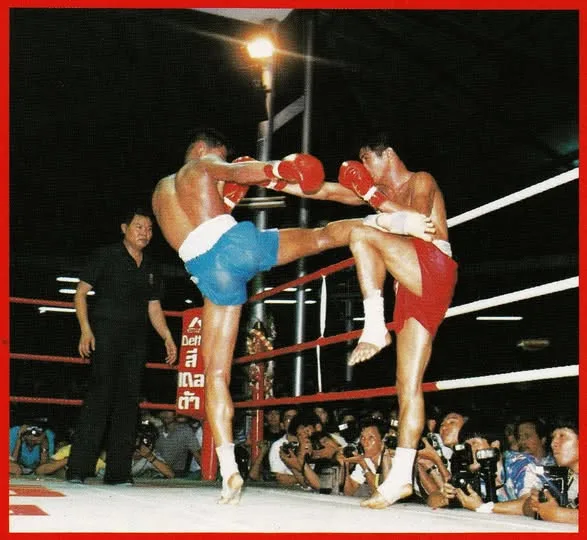
The fourth was real climax of the conflict, as WCN pushed in to trade, and Samart, backing off and retorted from a mobile bastion. A right uppercut rocked the aggressor, whose strikes failed to penetrate Samart’s defense – combined action of knee-ups, evasion by leaning back, or pre-emptive spurning. As the offensives intensified, in close knee exchanges and clinching, Samart, arms locking his man from under, tried a spin-throw, but ended up crumpling down with his foe standing - a sign of receding energy. It was the turning point of the fight. Then, WCN just kept boring in, fired a series of five right middle kicks at the champion, who, clearly exhausted, was unable to make a response. The challenger even returned his compliment of a spinning back elbow. When the bell sounded, Samart walked grimly back to his corner, as his opponent raised his arms in a visible mood of defiance ; a winner’s emotions, on such a decisive moment, could not be controlled. At this point, the odds changed to 10 -1 for WCN.
The final round saw Samart making the last efforts to sustain the match, but all he could deliver were sporadic, single blows, which lacked the momentum to register harm, as the event had now changed, theatrically, to be the show of the challenger.
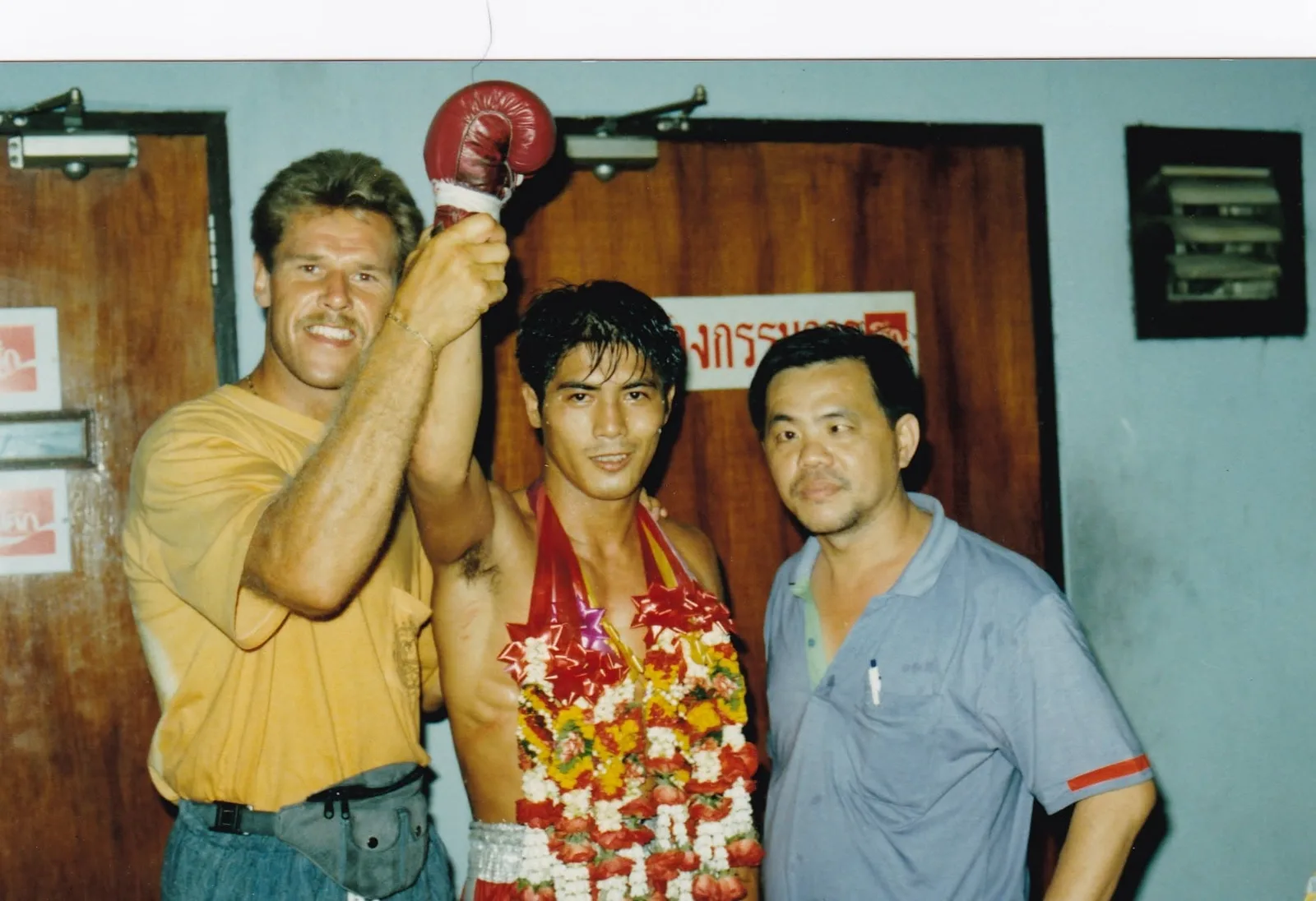
As the epical battle concluded, there was no doubt as to who the winner was. Wangchannoi, after his hand had been raised as the winner, sought very sincerely pardon from the fan’s beaten idol. Samart, with his mentor Kru Dhuey (Arjan Yodthong Senanan ) at his side, went prostrate on the ring floor bowing to the fans, before taking the microphone to formally apologize for the loss and announce his retirement from fighting.
Fans, who had been following Samart’s meteoric rise to national and then global stardom since the late 70’s, witnessed the parting scene sadly, and some were in tears. The loss, as it transpired was that the ring wonder-boy, having been totally swamped by commitments upon his recent switch to showbiz ( blame his cool looks), was derailed from the strict discipline required for a fighter. Consequently, he had only trained seven days for the big fight. The outcome speaks for itself.
Wangchannoi, after following his dream for three years, finally gained recognition as Yodmuaythai, by destiny is sometime more cruel than just mischievous with endless surprises….
On 30 June, 1989, less than two months since capturing the Yodmuaythai title, WCN riding on a nine-win streak, fought rising kicker Nophadet Narumol at 120 pounds in a major trophy match, losing on an upset points decision.
(To be continued)