Copied with permission from Alex Tsui, Muay Thai historian: Alex Tsui's Facebook
The Unforgiving Kicks, part 20 of 23
The Unforgiving Kicks Part 20
30 October 2026 · by Alex Tsui
Written by Alex Tsui, a long-form series of articles on the great kickers of Muay Thai history
BEST MATCH OF THE DECADE
Emergence of the Dutch and French, as respected powers in the world of muaythai was not something the Thai had anticipated, and the full potential of their presence was not visualized until 1990, when Mr. Songchai Ratanasuban (No. 1 Promoter of the nation) began to develop mega programs featuring foreign stars.
The reason was simply parochial attitude of stakeholders. Unlike the days of the great Apidej and beyond, the percentage of gamblers amount spectators had seen an upsurge, from 40 % to about 65 %, the rest being constituted by tourists and local fight fans. The stadiums, as one famed promoter puts it, were the kingdom’s biggest casinos, and hence, most if all of the match-making of fights were pre-determined by the gambling interests involved. That is, when the bigger the allure of the game is, the higher the chances of the fight to realize. With the farang before the 90’s, they were, no disrespect, considered “easy meat” (Kin Mu in Thai, meaning Pork Chop), and no pundits would bother with them. But, fighters like Fujiwara and Kaman, who were posing genuine threats to the Thais, changed that reality.
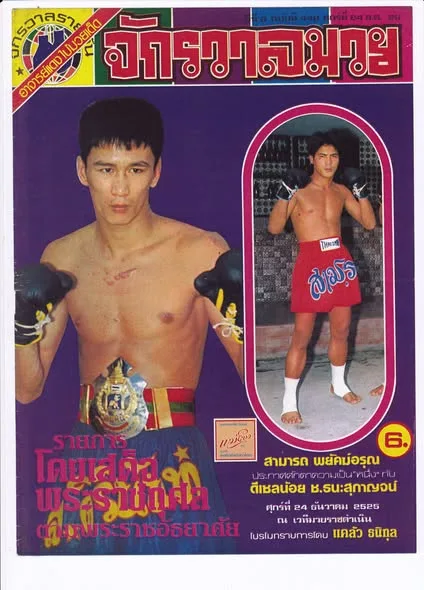
Experts and scholars frequently referred to the Dieselnoi-Samart mega fight (1982) as one pivotal match in recent history. The author tends to dissent from that notion Yes, it was a stupendous card on the occasion, but the quality of match was not there. The fight of the year, as it were, was first scheduled for 6.11, but postponed to 8.17, and then again reset for the RDN anniversary on December 24, as the card was upgraded to a Royal Cup program. The delays in strategic terms had contributed to mounting interest, as evidenced by the record ticket sales for the fight – 3,120,600 baht. Particularly interesting was the training regiments of the two top fighters (as reported by The Ring magazine ) :
Samart, the Ring Genius, had trained for 45 days, sparred totally 86 rounds, on a daily schedule of 26 rounds, including Pad-drills, clinching, and sparring. He was in top form, fully confident with his incredible skills and versatility. He was Best Fighter of the Year 1981, undefeated in last 14 fights, including two victories over King’s Cup winner Phadetsuek, and Nongkhai, Best Fighter 1980
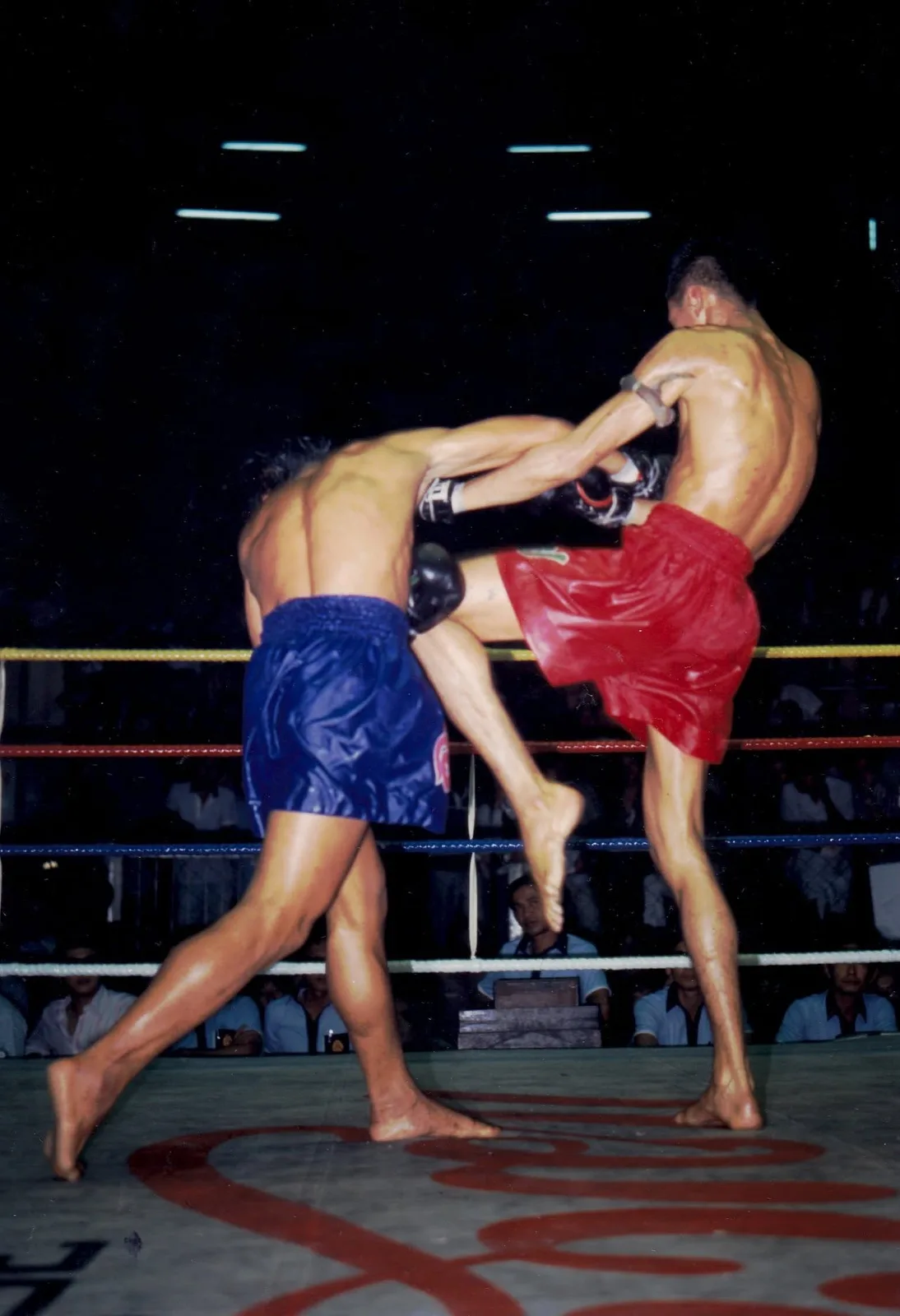
King Dieselnoi, the Monarch of muaythai, with only two losses in his last 14 bouts, was literally invincible, having eliminated Vicharnnoi (YMT 1977-79), Khaosod (for YMT title), Paennoi (rising star), Khaopong (Top star & old rival, ex LPN 126 champion), Raktae (for LPN 135 title), Phadetsuek (Fighter of the Year 1979), before capturing the World Martial Arts lightweight champion title in April, 1982 (strong WKA involvement in the landmark 3-day program), via KO wins over Korean and Japanese counterparts. Coming down from 146 to 132 pounds for this match, the knee-brawler par-excellence had a training program for 65 days, sparring three times a week (Monday, Wednesday & Friday), four rounds each time, to a total of 102 rounds.
The outcome is, of course, now history. The purse for the two legends came to a record 700,000 baht (believed to have been inflated by publicity), and the fight, for a more valid description, was one good tactical match between two superstars, with Dieselnoi being the favorite throughout. The two was known to be great friends, so brutality or ruthlessness was certainly not in the menu. The biggest surprise, though, was at the weigh-in, with Little Samart tipping the scale at 132, and Diesenoi, only 129.5 !
COUNTER-ESPIONAGE, THAI-STYLE
History by tradition often leaves some regret. Two monumental showdowns could have occurred in the 80’s, but somehow, destiny had dictated otherwise….
First, after the great showdown 1982, Dieselnoi was left with no challenger in sight, but the old saying, “Ayudhya never ceases to have able men”, once again rang true, when a dangerous Korat-stylist came in the limelight, with unique attributes in his mortal spurning action, reinforced by a lethal right kick (high), and devastating knee rams. Samart Prasarnmit (Lethal Spurner), RDN Jr. welterweight title-holder (1982), broke into the spotlight by beating Sansatarn, Khapong (floored by high kick to the neck), Phadetsuek, and Frenchman Kappeler (176 pounds). Next, the rigor of his merciless spurning forays systematically demobilized tough Jr. lightweight champion Khaosod (Fire Jellyfish), to the extent that, by the fourth round, two hard right kicks to the victim’s body, delivered with a resounding slam right at the point he was turning to the referee for mercy, had him fallen on the ground reeling in pain. Upon the TKO, the man, urinating blood (for a fractured bladder) was hospitalized for treatment. Author was at ringside at that time to witness the incident. Such an awesome killing machine !
In Samart’s next outing, Rerngsak, nicknamed “Stone Man”, rated No.4 on the national list for Yodmuaythai and contenders, was beaten in a one-sided show. After this performance, “Big” Samart advanced to No. 3rd in the kingdom, behind “Little” Samart and King Dieselnoi.
The scene was thus set for a Dieselnoi-Samart (Big) showdown, as the built (140) and destructive potency of the latter represented a best-qualified challenge to the king. The eminent Somchai Sriwatanachay (The Noble) for World Tix Corporation, began to mobilize resources to stage this dream match, for 24 November, 1983, in the undercard to the Phayao vs. Orono world boxing championship at Huamark Stadium. The purse for two main-event figures alone was quoted as 500,000 baht…
However, the dream was stymied, due to the intrusion of an unprecedented six million-baht gambling deal, that had made way for the epic showdown between Samart and WKA world kickboxing light-heavyweight champion Don (Hoshino) Wilson of the United States, to realize at LPN Stadium, on 2 December, 1983.
This was, indeed, the Fight of the Century, in all aspects of the game – elements of global politics (East vs. West), martial culture (muaythai v. American Karate), economic implications (highest purses), sports gaming (record high stake), and historical distinction (true gladiatorial combat-24 pounds difference) were all there. But, as always, there has to be an element of plotting in the game to make it exceptional, and this time, it was trickery to entice the foreign party (Wilson’s supporters in Hong Kong) to take on the wager game.
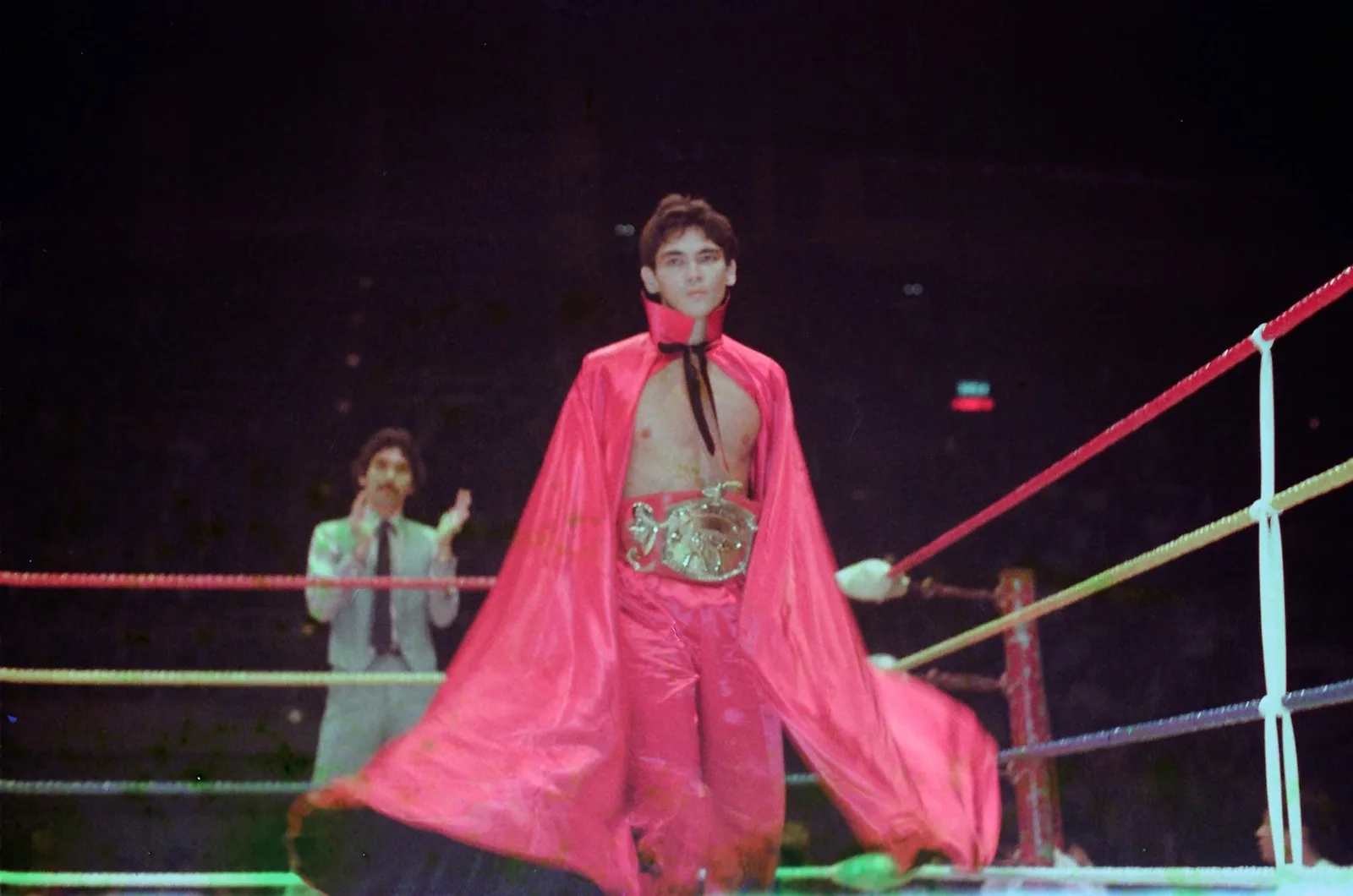
The game actually began in 1981 with the World Karate Association (WKA - later changed to World Kickboxing Association pursuant to an expansion policy) coming to Hong Kong to establish her Asian operations. The great American entourage of fighting stars showcased, comprised Benny “The Jet” Urquidez, “Fiery Dragon” Don Wilson, “Son of the Tiger” Billy Chau… the list goes on. The initial appeal was overwhelming, as the full-contact element along with the prospects of world fame, impacted positively on the fight community in Hong Kong. It was the world’s most advanced ring combat sport, per the product image publicized. With the brand so fashionable, many of the local Chinese Kungfu schools thus joined the action.
Then came the test of muaythai, on 8 September, 1981. By that two 3rd - tier Thai fighters, Jaidee (former RDN 135 champion blown up to 160 pounds) and Monthorn (provincial notable) were retained – through author’s late guru Fong Yeh to fight under WKA rules – full-contact kickboxing, with mandate on foot-pads, prohibiting elbow or knee. The Thais trained only a week for the hybrid assignment. The result : local Kungfu champion was kayoed in two by one punch, whilst Don Wilson fought a full seven rounds with the Thai. The latter match was heavily broadcasted by the WKA network, as a landmark conquest of American kickboxing over “Champion of the Royal Rajadamnern Stadium of Thailand “...
Inspired by these events, Fong Yeh brought a troupe of Thai boxers in, and crushed the local elites in a monumental two-day program in November. Following closely was a skirmish with a mixed-disciplined team from Australia, USA, Malaysia and Hong Kong on 2-3 January, 1982. The Thais were triumphant (with the exception of one political draw) through all these encounters, and Jaidee, (nicknamed “Condor” for his exuberant tattoo on his chest) after a stunning elbow KO over Potita Gade Le’ dua (Australia Open-weight Karate Champion 1979-80), became an idol in Hong Kong. Fan's enthusiasm began to see a drift towards muaythai.
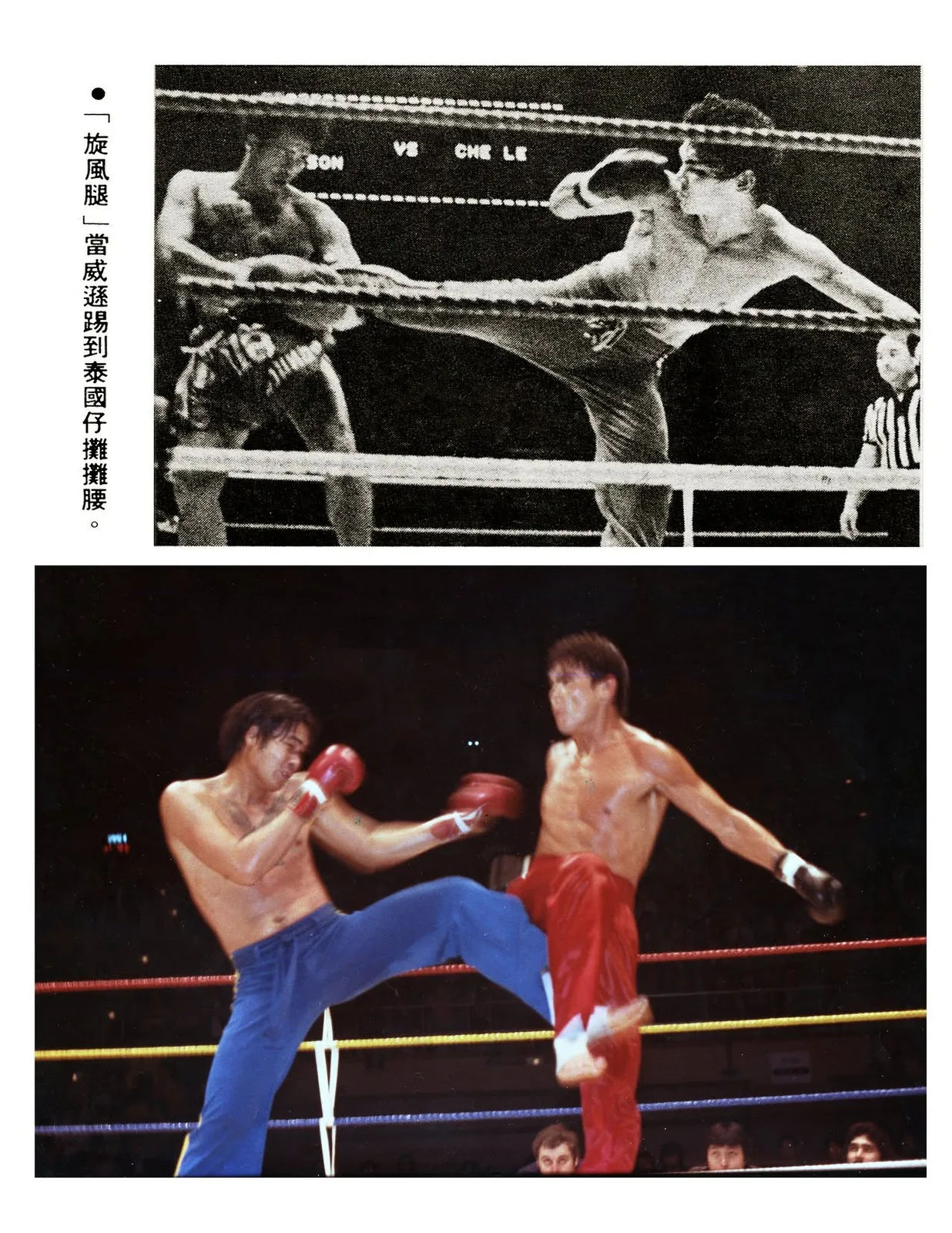
WKA Hong Kong was definitely not comfortable with the tide favoring muaythai rising. The business world dictated that. Fans were clamoring for a Wilson-Jaidee rematch, in full Thai-style rules, to determine, once and for all, which was the superior art. As expected, things were heating up, and the Colony was anxiously waiting for the encore, but then, all of a sudden, Jaidee had gone missing from his camp. Words were he had gone to Japan (where WKA had a long connection since 1977) for a match.
Came the big day in mid-1982, Jaidee turned up in Hong Kong for a rematch against Wilson, but under the same managerial platform as the WKA. It was advertised as a “full” muaythai contest, but it was nothing close to that. Jaidee was wearing long Karate pants, no Mongkol; neither was there Thai music, nor pre-fight ritual… He looked miserable (and conceivably ashamed) as the deceit, observed by all, was not only on his camp or manager, but on the national art of his own country. One may not find it objectionable in what he did, but it was the treacherous way it was done. Before the main event, author saw him in the changing room. Head down and evasive, he disclosed he had been promised fights by the Japanese agent, but for months, he was only teaching in a gym. This was commercial espionage, at its very best, in the living drama…
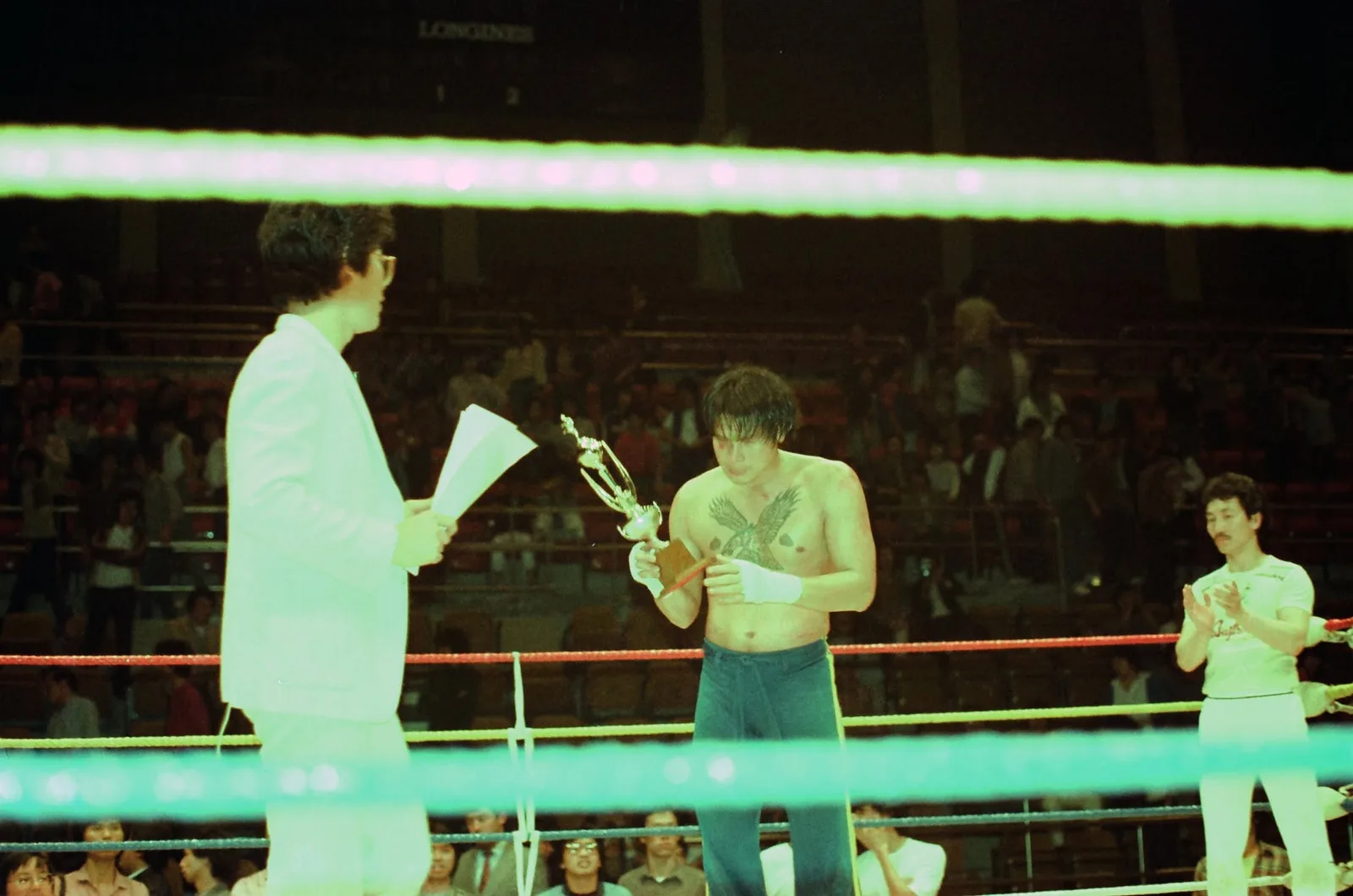
For nine rounds, Wilson (175) battered Jaidee (167) like a star, but there was little applause. He won the verdict, yes, but the rather shady arrangement behind was apparent to all. Post fight, the sports media was not kind to the detestable show, and the criticism was severe.
To remedy the unforeseen negative impact, the promoter got in touch with Bangkok’s famed Fairtex camp (Owner Philip Wong was author’s old schoolmate), and arranged a match between Wilson and 27 year-old Pongdejnoi, former 140 pound RDN champion, newly married and inactive since late 1981. A three-time champion, he was never a strong fighter, but better known for having been disqualified twice in his title defenses. The selection was tailor-made for the American.
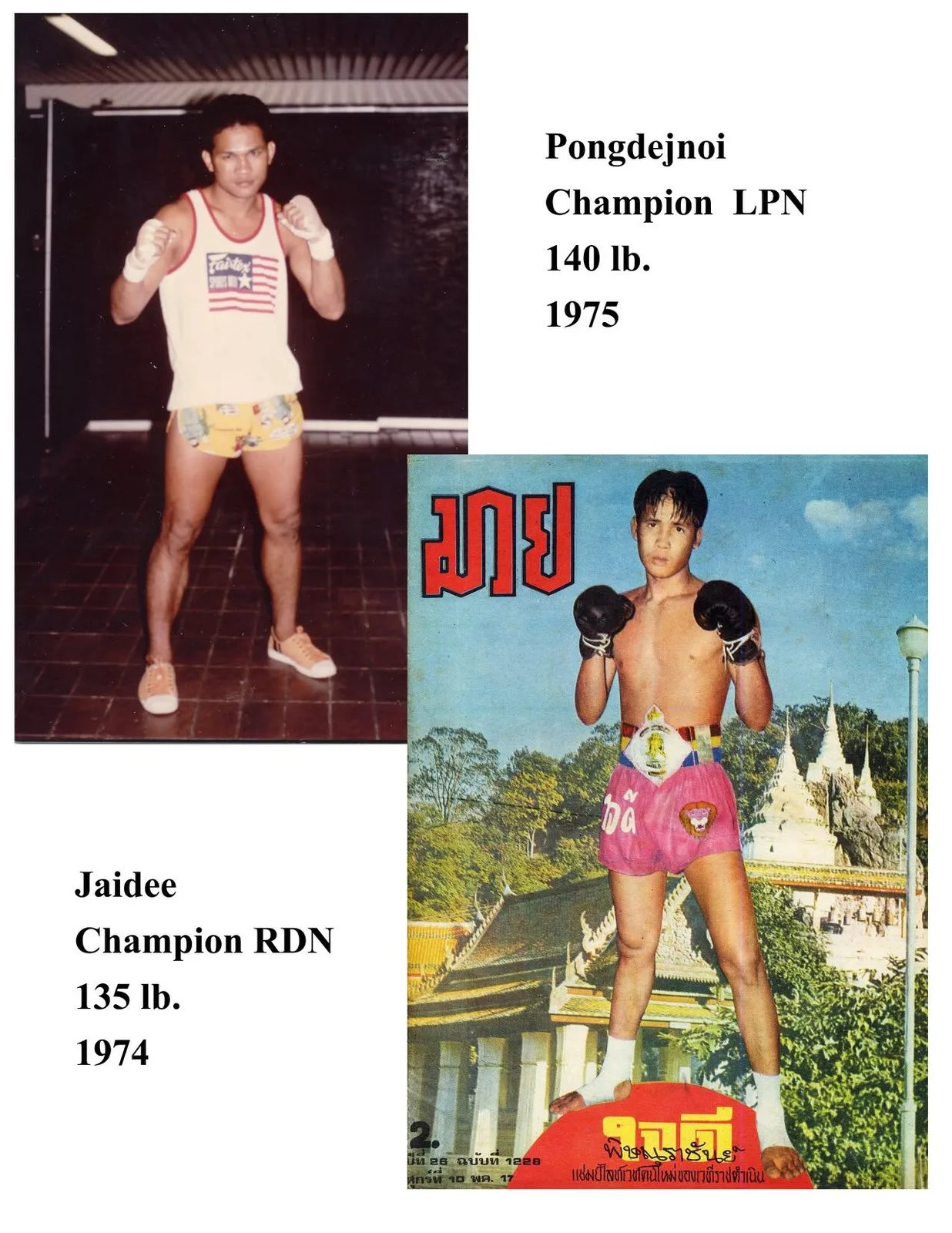
And, following much hype, Wilson defeated the washed-up Thai by KO in the third. The latter, at 150, was outclassed completely by the 25-pound heavier rival. Again, there was much jubilation, for the WKA icon has won against a Thai “champion”, fair and square...
Assured by this victory, Wilson’s camp agreed to fight Big Samart Prasarnmit AND, pick up the gauntlet on the fight – the wager being three million-baht aside, winner takes all on knockout, and if decided via decision, a third (one million) was payable. This was the highest wager at stake in 20th century muaythai.
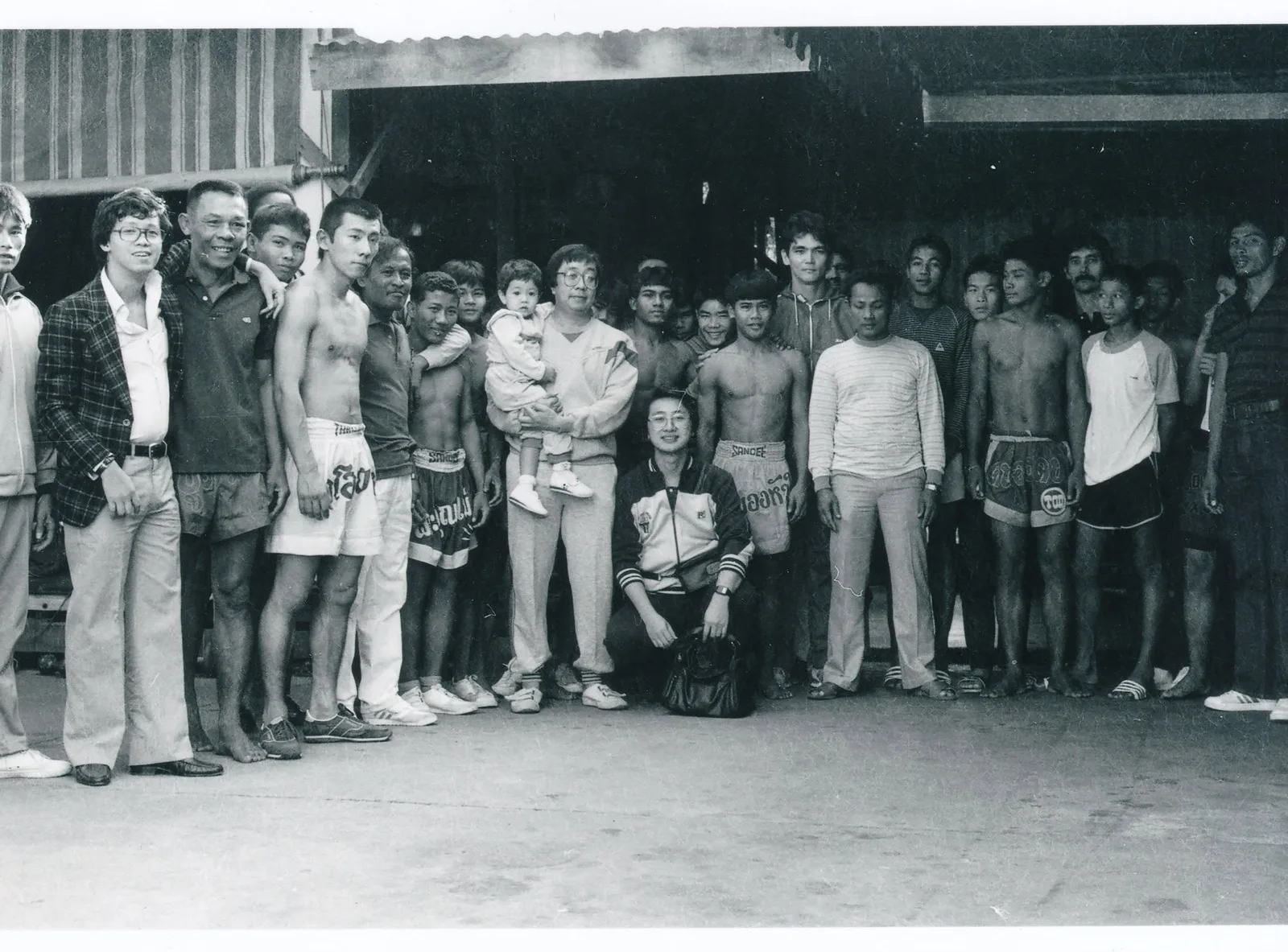
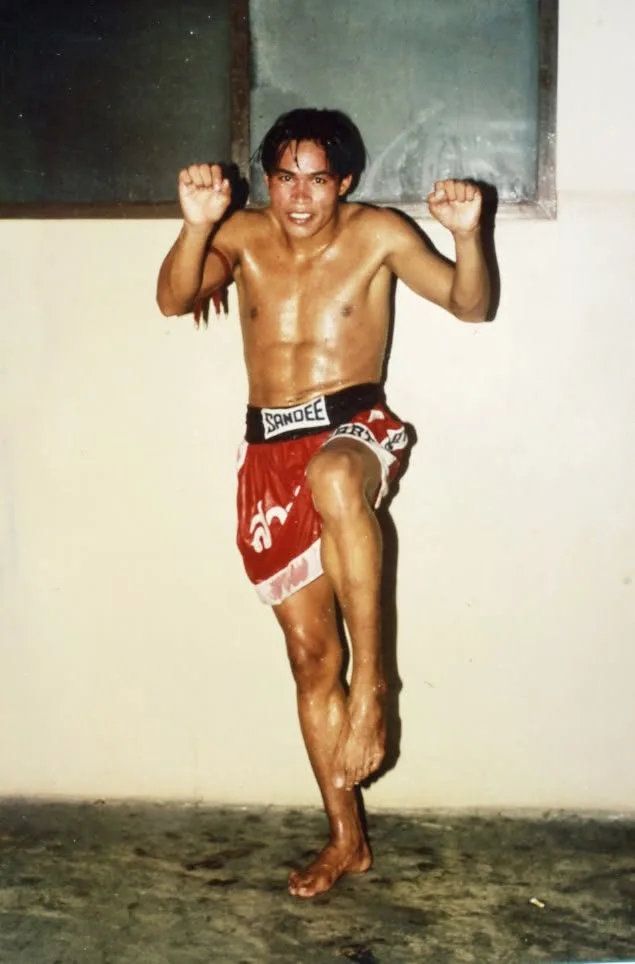
The big fight, at Lumpini Stadium, was promoted by Mr. Philip Wong, billed Suek Fairtex. There was not a huge gate, since it was basically a two-party game. The flamboyant Wilson (172) looked impressive in the first two minutes, when he flashed long side kicks, round kicks, and combination punches at the seasoned Thai, to no real effect. But once the Korat spurner (148) let loose his right flying kick, he had the American constantly on the defense. Several times, that right flier grazed Wilson’s face. Clearly troubled by the Thai’s precision kicks and elbows, he was confined in a passive position. In the third and fourth, the Thai’s vicious knee onslaught floored the American three times in all for 8-counts, He looked bad and beaten, but the fans booed Samart for not boring in to make a kill (one more knockdown in the 3rd would have activated stoppage by TKO). The last round saw Wilson retaliating with punches, but the Thai controlled the pace and tempo of the exchanges effectively, connecting with yet another high right to the neck, before cruising to a unanimous decision in his favour.
(To be continued)