Copied with permission from Alex Tsui, Muay Thai historian: Alex Tsui's Facebook
The Unforgiving Kicks, part 17 of 18
The Unforgiving Kicks Part 17 - Legacy of Apidej
29 October 2026 · by Alex Tsui
Written by Alex Tsui, a long-form series of articles on the great kickers of Muay Thai history
With the globalization of muaythai as a fight sport, advocates of the Thai national sport are keen to learn who is who in the world of muaythai.
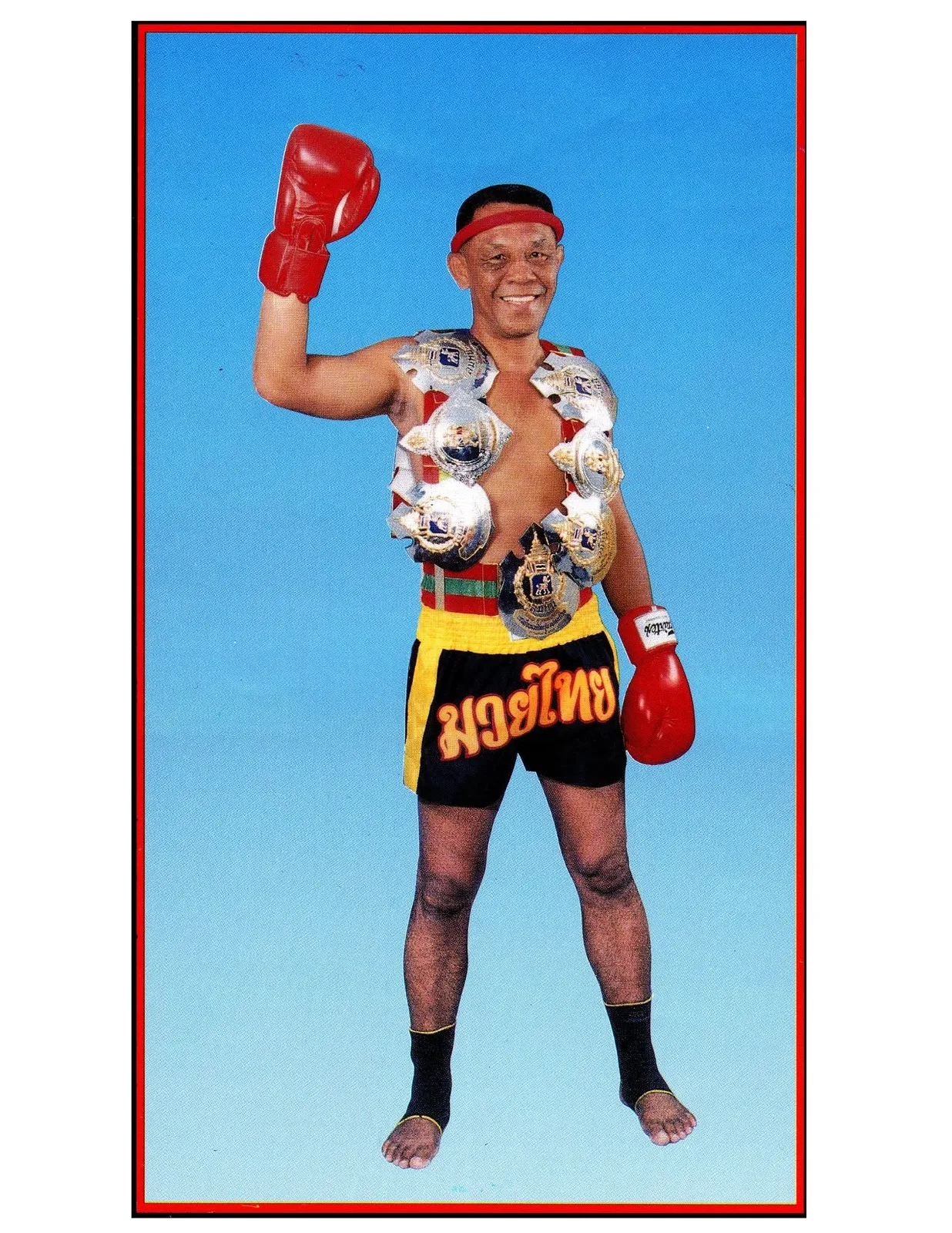
Chief trainer for Fairtex Camp for over 30 years - an icon and champion loved by all across the world.
Apidej was the first to become known internationally (named in Japanese kickboxing publications and a western Karate magazine) for having the best legs in the trade. Experts in Thailand’s boxing media have recognized him as Fighter of the Century, on account of his prolonged and wide popularity, especially since he was the idol of the late King Bhumibol Adulyadej the Great going back to the 60’s. His image is on display inside the National Sports Authority Museum at Hua Mark Stadium, Bangkok, and he was inducted into the Hall of fame, the second time, by the Siam Sports Award (2009).
He was a fighting champion who had endured all the trials and tribulations at the highest level of the sport in the Kingdom, dominating the entire field for ten years (1961-71), longer than all other superstars in modern times. In comparison with other top boxers, “Yaksa Sukh” (1947-53), “Pluto” Somdej (1951-58), “Diamond Crown Champion” Adul (1959-62), “Comet of the South” Puth (1973-77), and “King of the Sky-Piercing Knee” Dieselnoi (1980-86), he stands out as having the longest and busiest reign as undisputed king in the golden era of modern muaythai.
Myth of the Great Kicker
Against this colorful imposing backdrop of a truly seasoned warrior, amongst the many stories and rumours related in the media, including a number of scandalous losses, it may be opportune to allow the author to evaluate or clarify them as far as possible, in order that a true account of the great fighter is established.
First, the questionable losses : In Apidej’s 1982 trip to Hong Kong, along with the present of a much-valued 1960 edition of the amulet of Luang Poh Daeng ( famous holy abbot of Wat Ban Kao Da-it, Petchaburi Province), he had the occasion to reveal that, in his long career, he had thrown “five fights”. I did not ask further, as I truly felt honored that he was so candid on the sensitive subject.
Cases of fraud or deviant boxing business
Throwing fights (Lom Muay in Thai) is a vice probably as old as muaythai itself, due to its long evolution as a recreational pastime. Players were often casual or haphazard in their approach to the fight, hence likely to bend the rules, or foul-play as they wished. From the author’s experience, the reasons that prompt fighters to throw a fight may broadly fall into four categories. Manipulation of gambling syndicates is the prime cause. Next is often influence of family or a relation (mostly under financial pressure). The third is managerial plot to gain a rematch, or in the case of a top fighter with no qualified contenders in sight, a loss should open up chances for more fights, or avert a sure-starvation situation. Being supreme, in reality, could lead to non-employment for both the fighter and manager. Lastly, out of simple goodwill, a boxer could drop a fight in order to help a friend (for a good payday or to facilitate the person’s advancement).
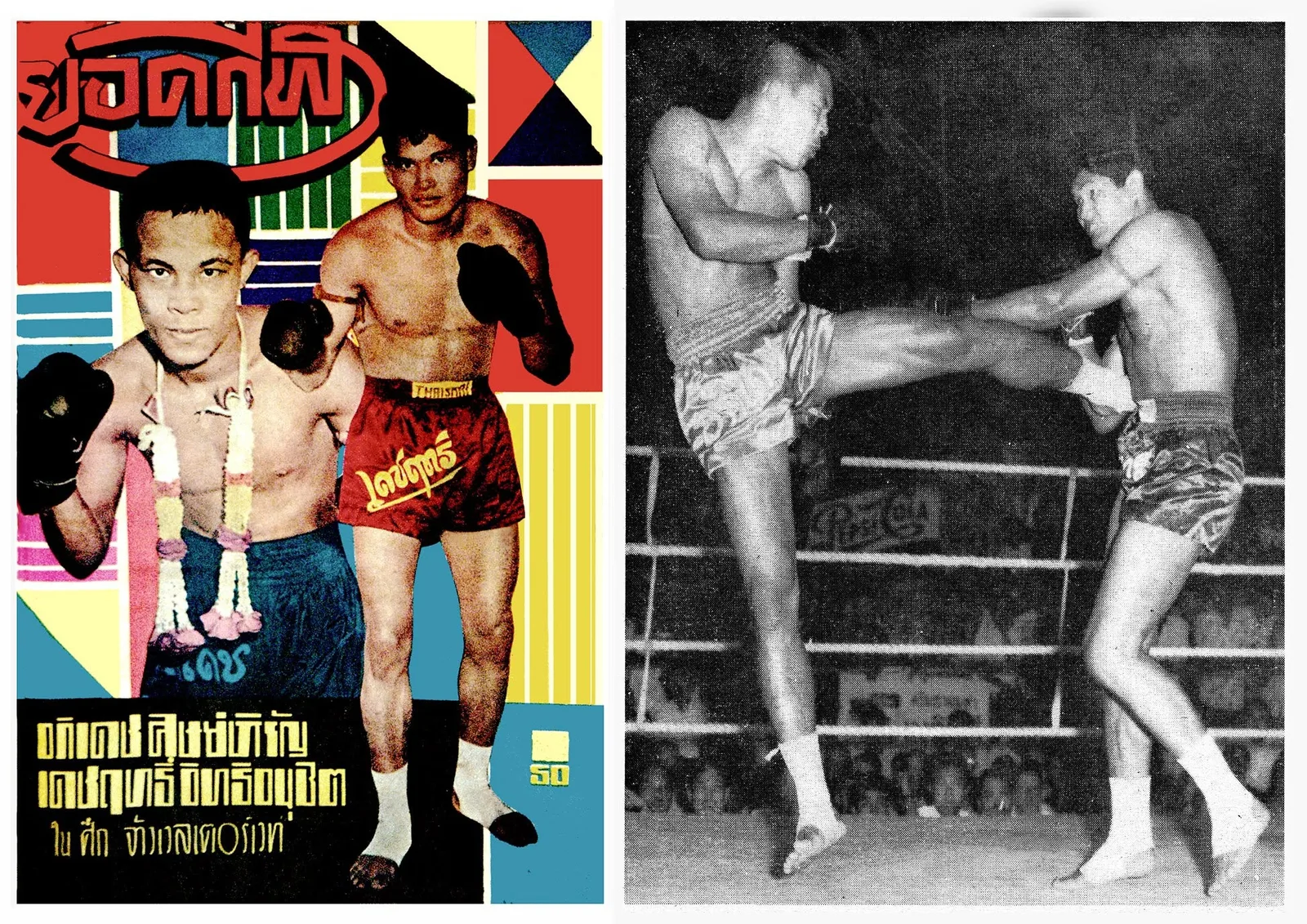
Apiej-Dejrit II, 1964. Apidej lost this one, but the rubber match staged later in the year broke all gate records, and he had his revenge.
By an objective analysis of Apidej’s disputable losses against the data available in published accounts, the author concludes that the four bouts listed in the following were most probably those in which he had either collaborated or conceded to lose. The points loss to Dejrit (1964), his first defeat in over two years, was a concession. He had been unbeatable all along, and that loss actually led to the economic marvel in their third match that followed. The common view of the kayo by Danchai (1966) was a fix, and the video evidence tends to be supportive of that assumption. Then, in the first of two fights against Sukkasem, it seems he was giving his former training partner a pass first, and rightly won the second. This was possibly an act of compassion for a junior associate. The fourth was the kayo in 1 (2:45) by Huasai (the underdog) 1970. It is recalled that he had disposed of the puncher handily six months earlier, and the upset was rather suspect. With the subsequent Kongdej-Huasai mega fight in perspective, that loss could well be a case of facilitation. The author is undecided as far as the fifth bout was concerned.
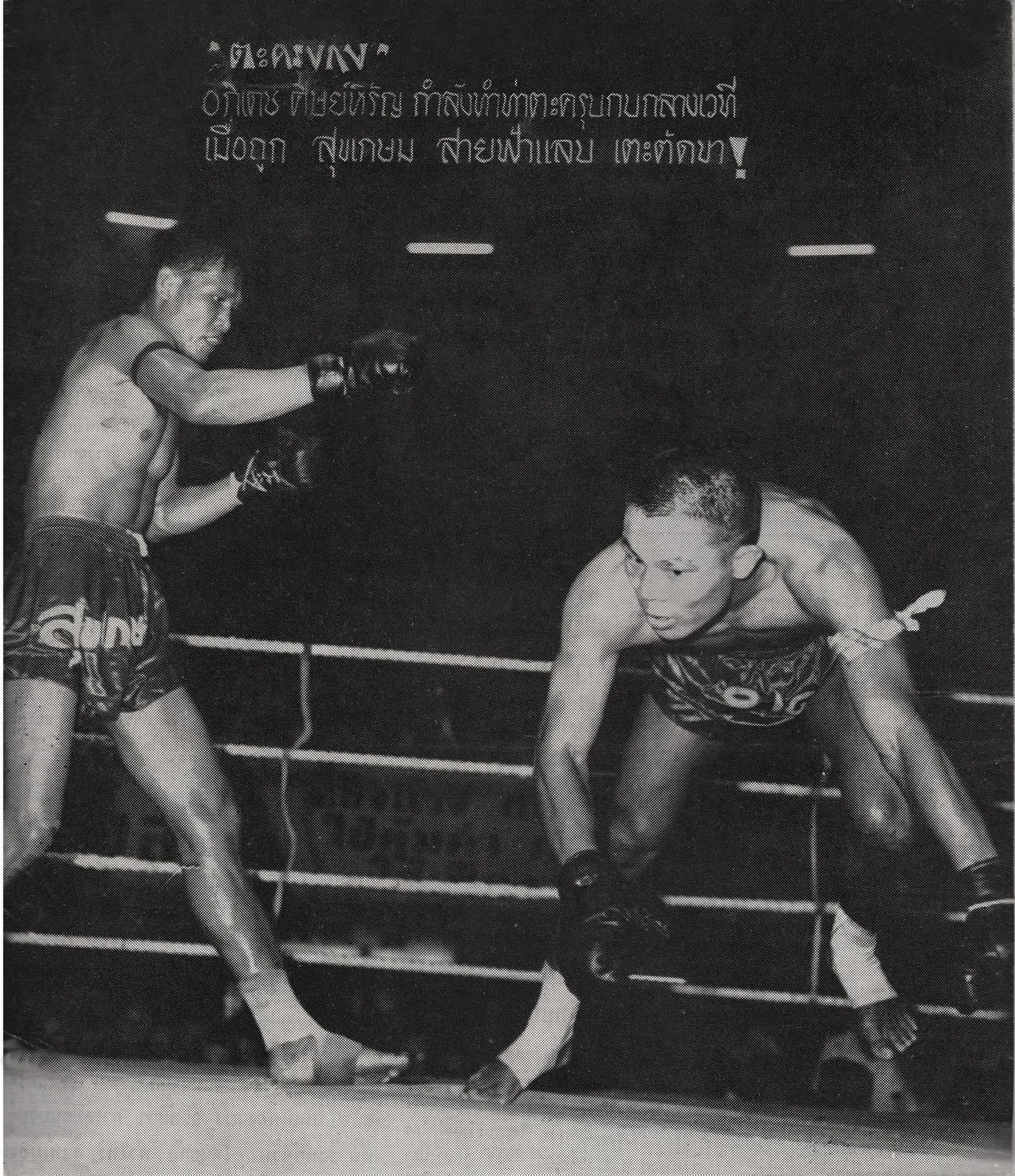
Sukkasem (left) won this one against Apidej, 1968. The two used to be training partners once.
The death of an opponent 1964
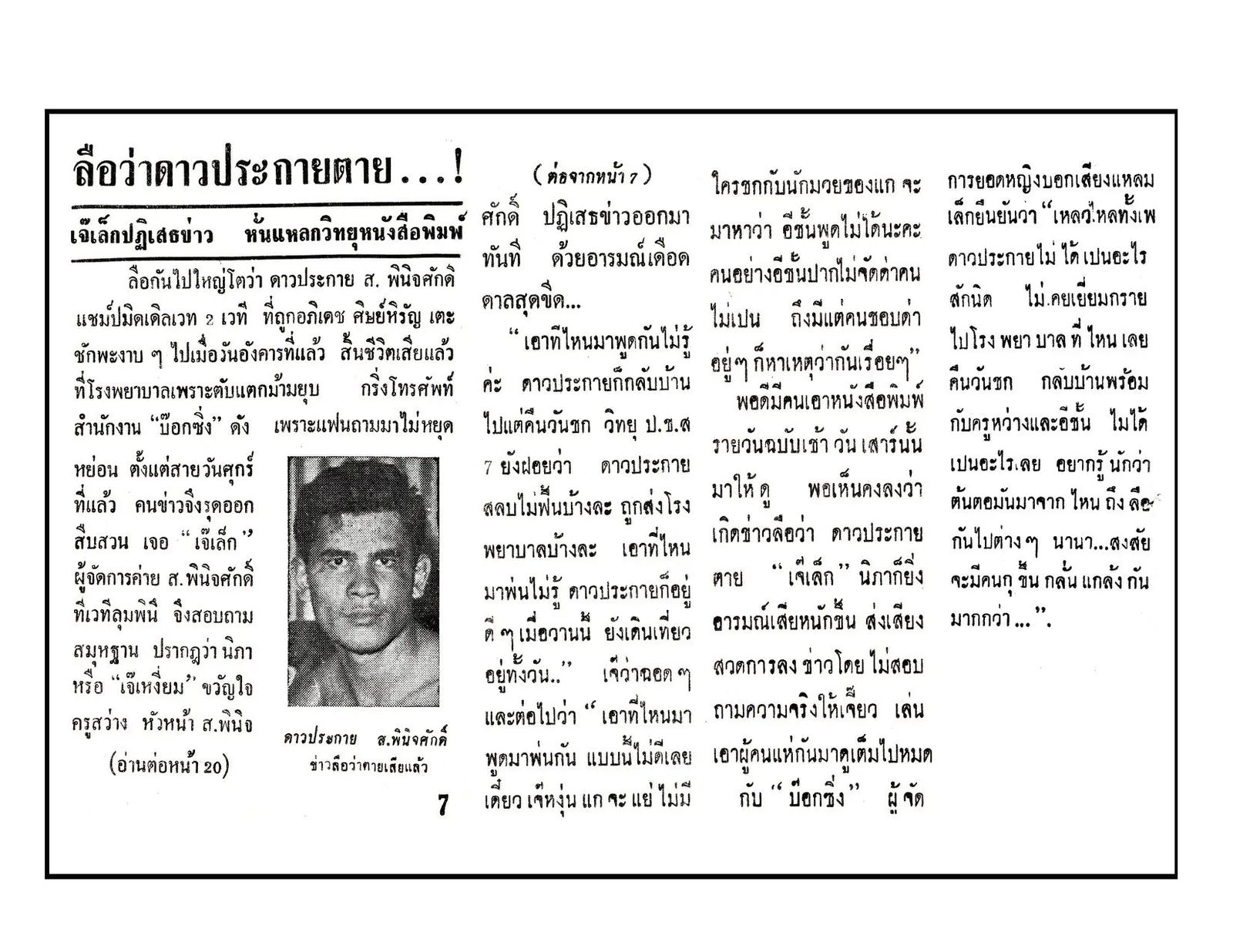
Rumour of death of Daoprakai after being KO'd by Apidej was circulated like wild-fire, 1964. But it was actually misinformation.
The last episode of contention to clarify was the rumored “death” of an opponent from his lethal kicking. The only case identified was the kayo of Daoprakai S. Pinitsak (two-stadium champion) on 8 September, 1964, at Lumpinee Stadium. The Anton Perrera reference to the “death” in the Look East magazine was written a decade after his retirement from the main media, and almost twenty years behind the event. Details of the event turning obscure or became distorted through the passing of time is only reasonable. From the author’s research, it is conclusive that such rumour was in deed rife at the time, but later dismissed as misinformation. The excerpt from a Thai boxing weekly indicates the true position.
In any event, circulation of the blown-up version of truth, due to its horrific nature, did lend to magnifying the already awesome reputation of the Great Kicker, and, undeniably, has contributed to the legendary status of the man.
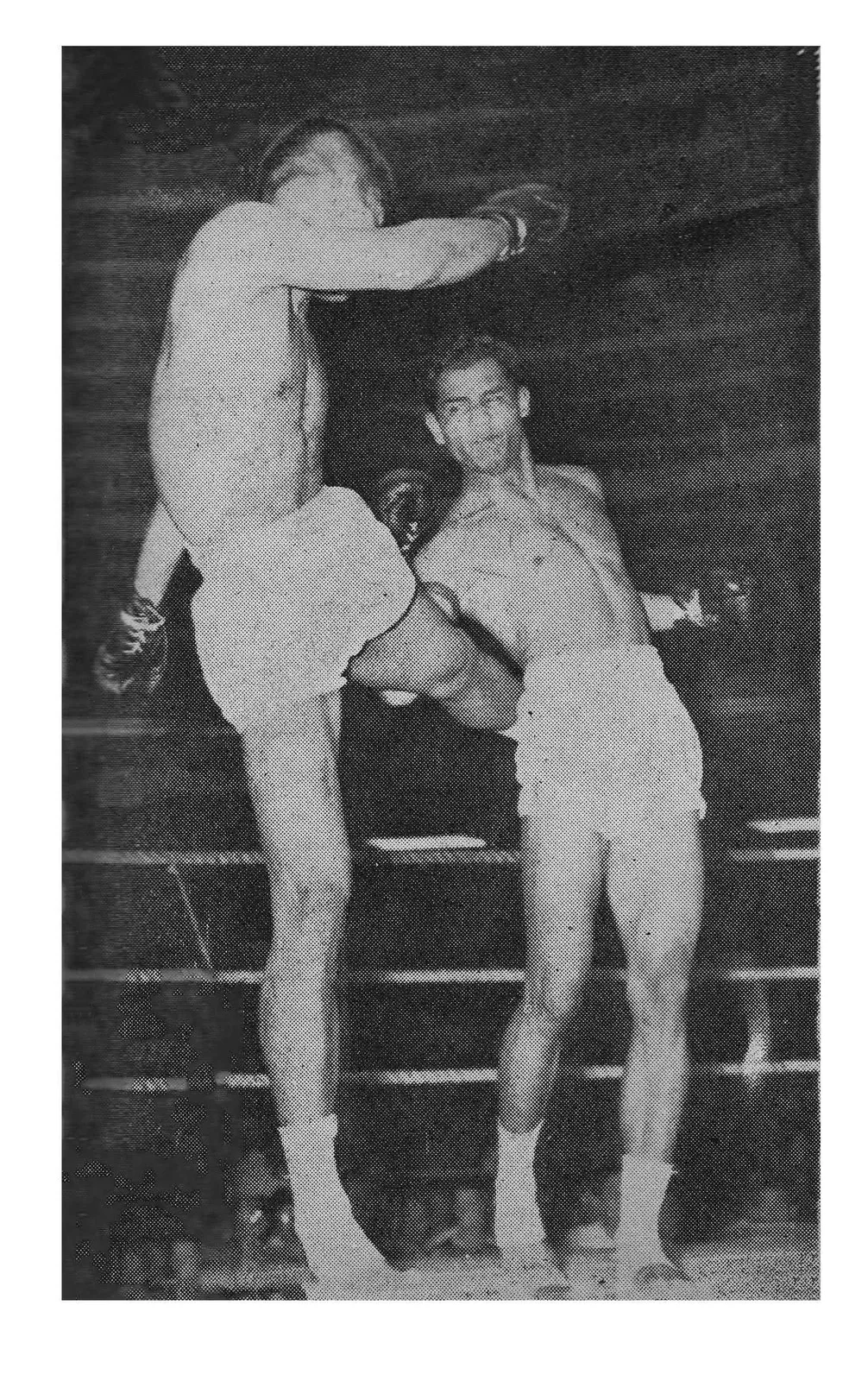
One of the left kicks that fractured Daoprakai's ribs - the Great Kicker's awesome reputation thus rocketed sky-high.
(To be continued)