Copied with permission from Alex Tsui, Muay Thai historian: Alex Tsui's Facebook
The Unforgiving Kicks, part 13 of 18
The Unforgiving Kicks Part XIII - Reign of the Undisputed King of Muaythai
29 October 2026 · by Alex Tsui
Written by Alex Tsui, a long-form series of articles on the great kickers of Muay Thai history
Making of a Superstar
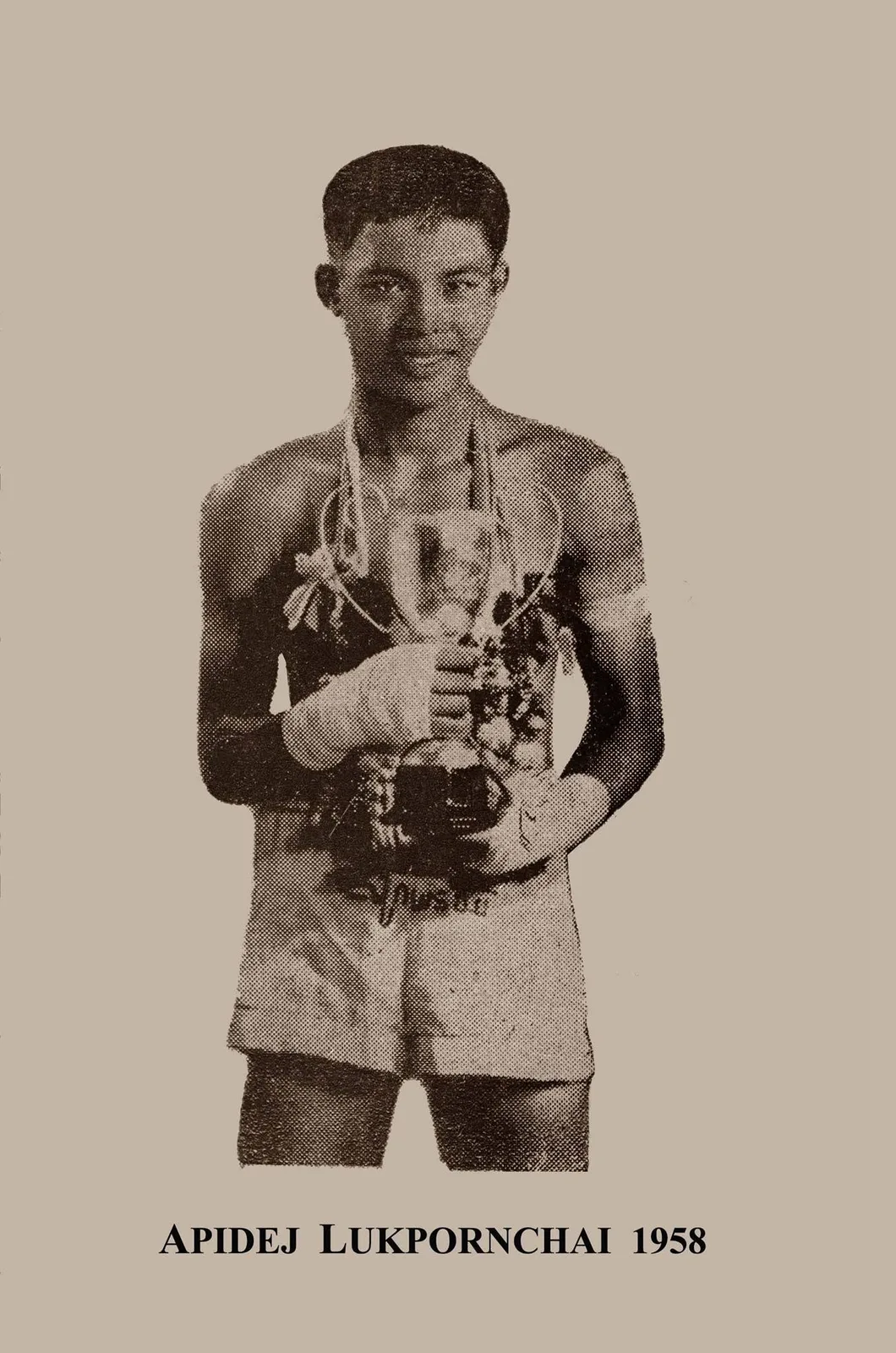
Young Apidej in 1958, then aged 17 years.
The story of the mighty Apidej (name meaning extraordinary power or might) began on 1 September, 1941 in a quiet village at the district of Heronry Green, Samut Songkram (龍仔厝) province, Central Thailand. Real name Narong Songmanee, he was born the only son to a torn family, but in hardship as it was, made his way through a local high school (6th Year). He became interested in boxing, Thai-style, since 13 years, tutored by a physical training teacher (Kro Porn), and began fighting in the name of Narongdej Lukpornchai (later changed to Apidej Singhmuangraj), and at 16, was formally inducted into the Sidhiran ( meaning student of God Hiran or Lord of gold ) boxing camp, run by the shrewd couple Kasem-Angun Iampinyo. The latter, Madam Angun, school mistress, was destined to guide the great boxer through his 20-year career.
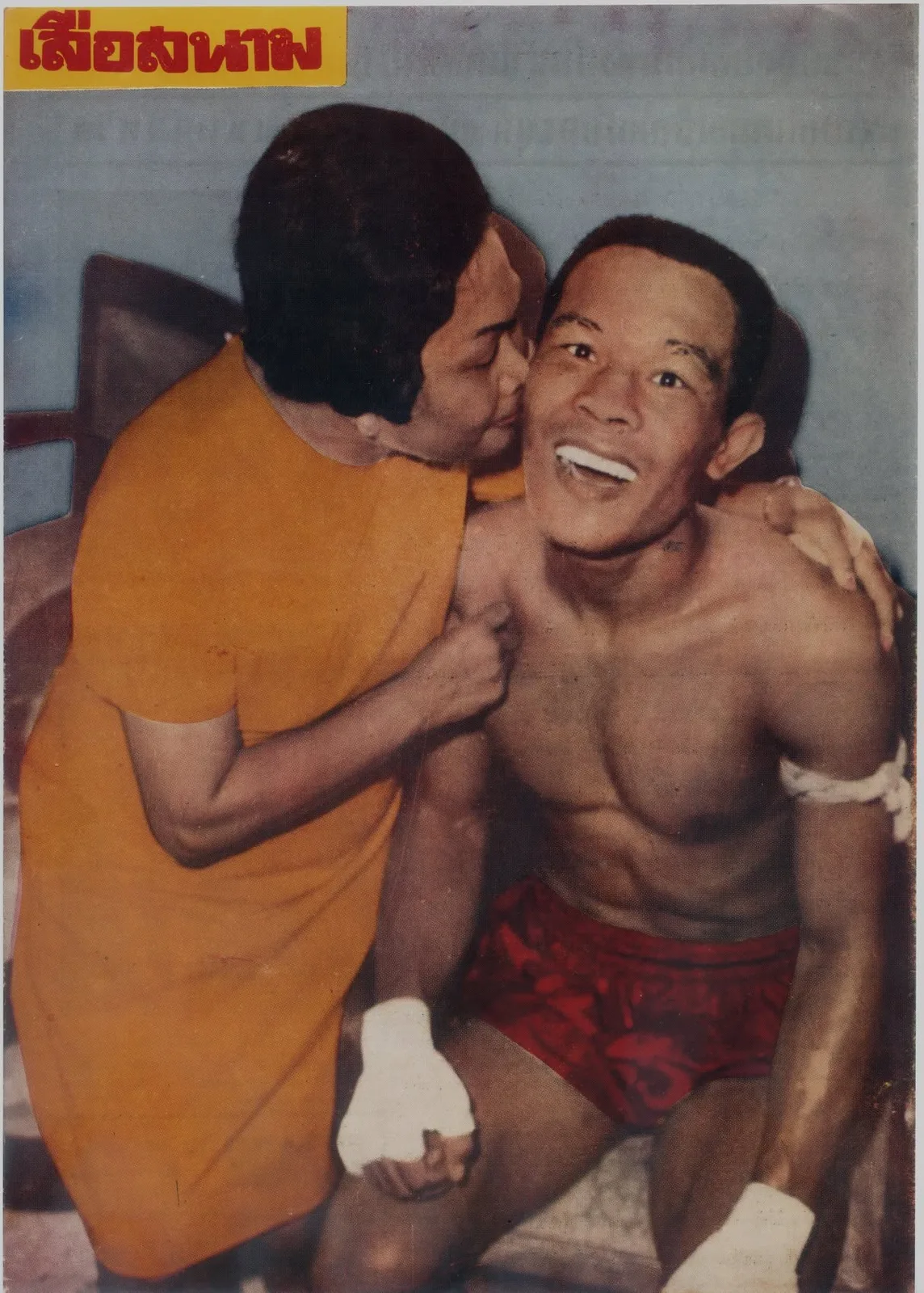
Gesture of motherly love - Madam Angun Iampinyo expressing love and support to her fighter Apidej, 1968.
From 1957-59, the talented boxer built up a 25-0 record (8 in the capital), registering 20 knockouts, the last being the lightning 1-round KO of veteran Pansak Vittichai (25.12.59). After three more KO victories, he met the first setback of his life, stopped in R3 by an ambush elbow from Komaldet Pitaksamut, in his own hometown at Bang Khonthi. Two ensuing losses, both by knockout, had the prospects of his ascension further obscured, and rendered the integrity of his heart and chin suspect in the eyes of critics. However, coming back with seven straight wins in 1961, eliminating such top-ranked adversaries as Danchai, Chakad and Keowan, firmly put him in line to challenge Adul Srisothorn, the Diamond Crown Champion, in the Fight of the Year 1961, billed for the ultimate Yodmuaythai honour.
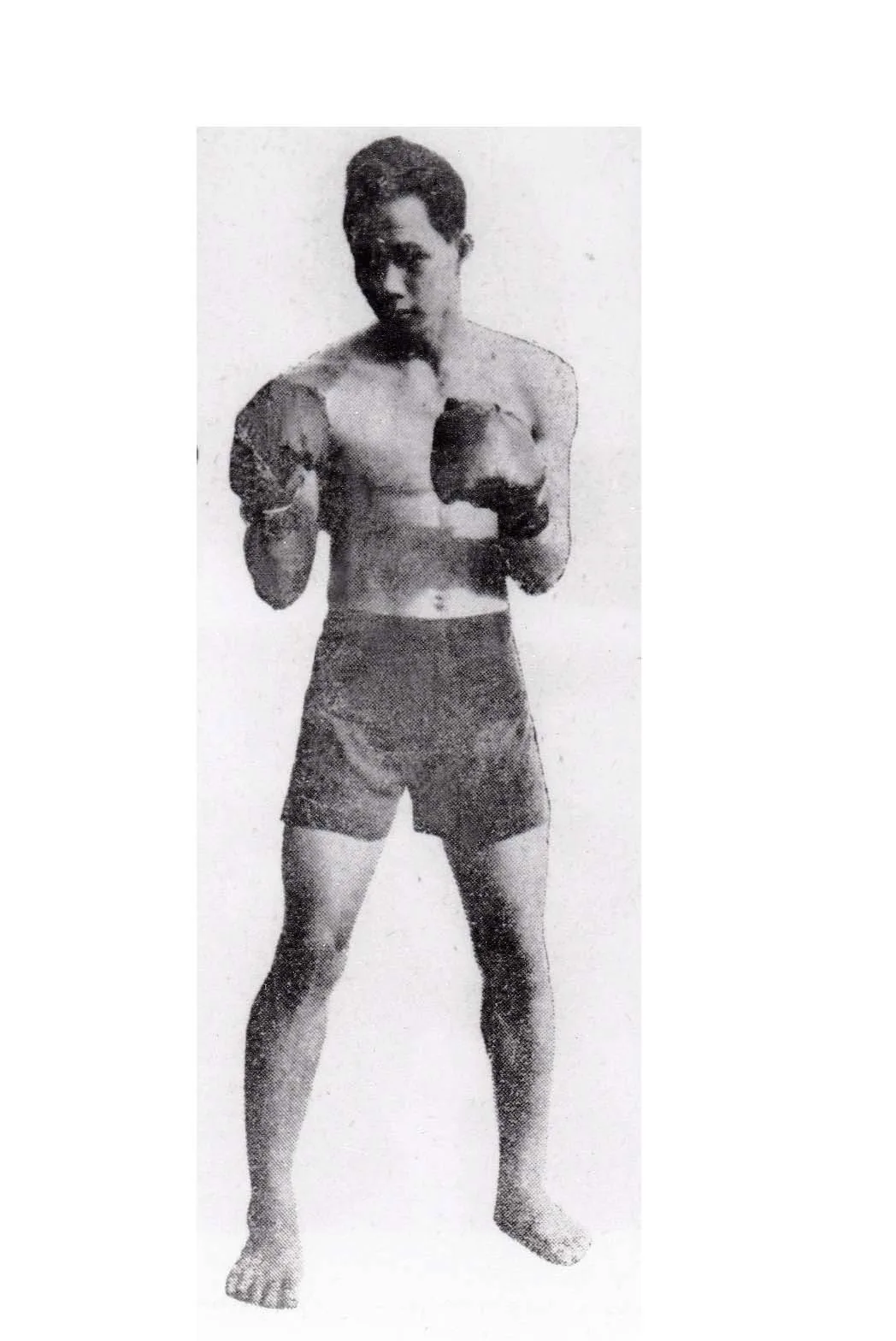
Komaldey Pitaksamut, who handed the first KO defeat to Apidej in 1960. The outcome was never expected.
At the premier Rajadamnern showdown on 19 October, the great Adul, muaythai icon of the nation, dominated in the first three rounds, with incredible speed and dazzling versatility. The fight contract limited the boxers weight at 144 pounds, so by the 4th, the kicker was a spent force, for the control of weight, compounded by the intensive battle, caused serious dehydration and exhaustion. Hanging on the ropes, he was disabled by a six-blow kneeing assault on the body to lose the fight, on a 10-count knockout... However, after five victories (3 KOs) hence, on 13 September, 1962, scaling 146 pounds, and kicks working like piston, he avenged the previous setback, by humbling Adul (142) on points in a five-round RDN rematch, and captured, finally, the Yodmuaythai (Top Thai Boxer) title. The landmark rematch grossed 380,000 baht, and his purse was a record 40,000 baht.
Fighting in the sixth year of his campaign, Apidej has found his place of glory in history.
The years 1962-65 was the peak of the Great Kicker’s career, when he dominated the nation’s most famous sport with lethal kicks and superb ring craft, and was recognized the top
fighter of the kingdom. Not only was he the undisputed king of muaythai, a switch to pro boxing saw his taking, after five bouts, the Oriental Boxing Federation (OBF) 147-pound title, via a 1R TKO over Eliseo Aranda of the Philippines, on 7 January, 1965.
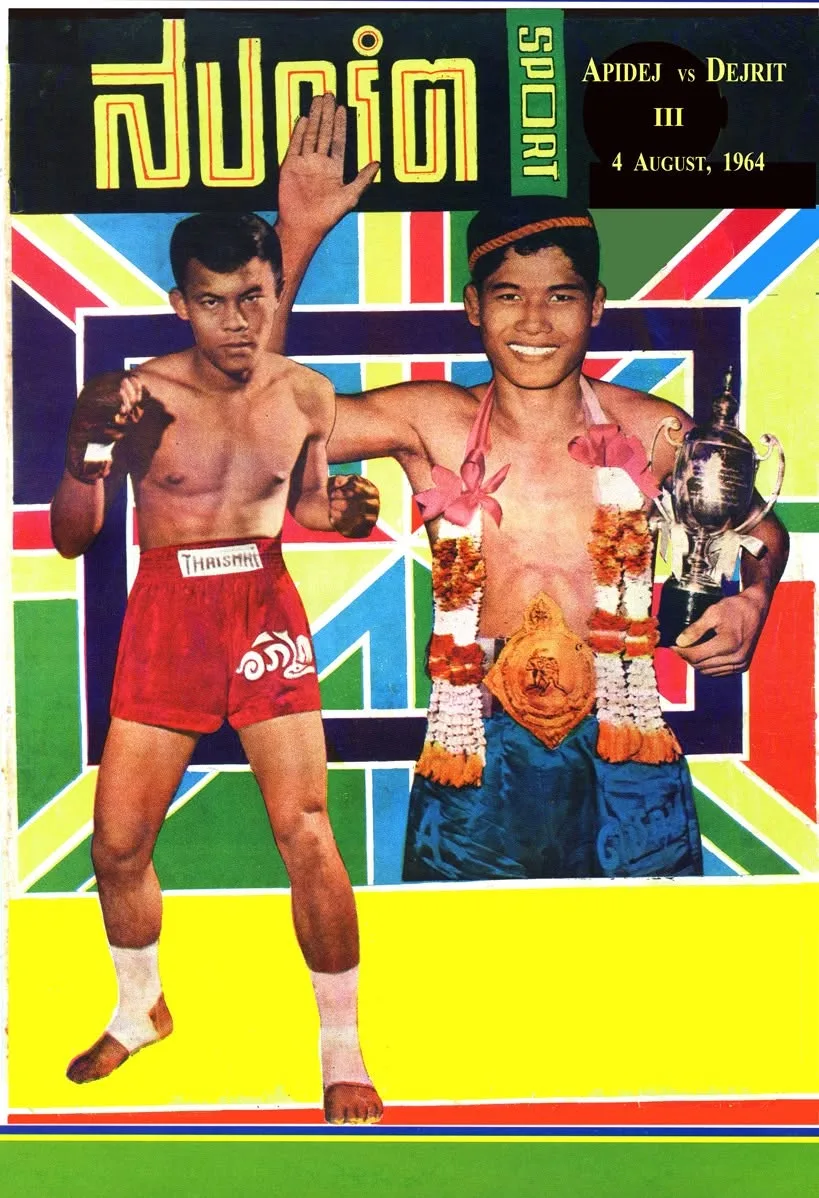
Apidej-Dejrit III - Fight of the year 1964 A classical showdown that ended with Apidej defending his RDN title and Yodmuaythai honour.
In that time, he had already annexed the RDN & LPN welterweight titles in both pro boxing and muaythai, captured the first ever PBAT (Champion of Thailand) champion belt, won the honour of Yodmuaythai against Adul, Sompong, and Dejrit (twice); In the Fight of the Year 1963, he stopped Dejrit Intrabutr (King’s Cup winner) with an elbow smash in the first round, to defend his RDN title and YMT honour. The third clash with Dejrit on 4 August, 1964, with both the PBAT (National) and LPN titles at stake, recorded the biggest sell-out, bringing in 450,000 baht for LPN stadium. Apidej won the classic conflict on a TKO in two, cutting his man with a chisel-like elbow smash. Another encore, on 11 November, failed to duplicate the economic miracle, but the Great Kicker drummed out a clean points decision, defending his PBAT title against Dejrit, and was paid 90,000 baht, the highest ever in Thai-style boxing at the time. He was truly the King.
Secrets of Apidej’s Kicks
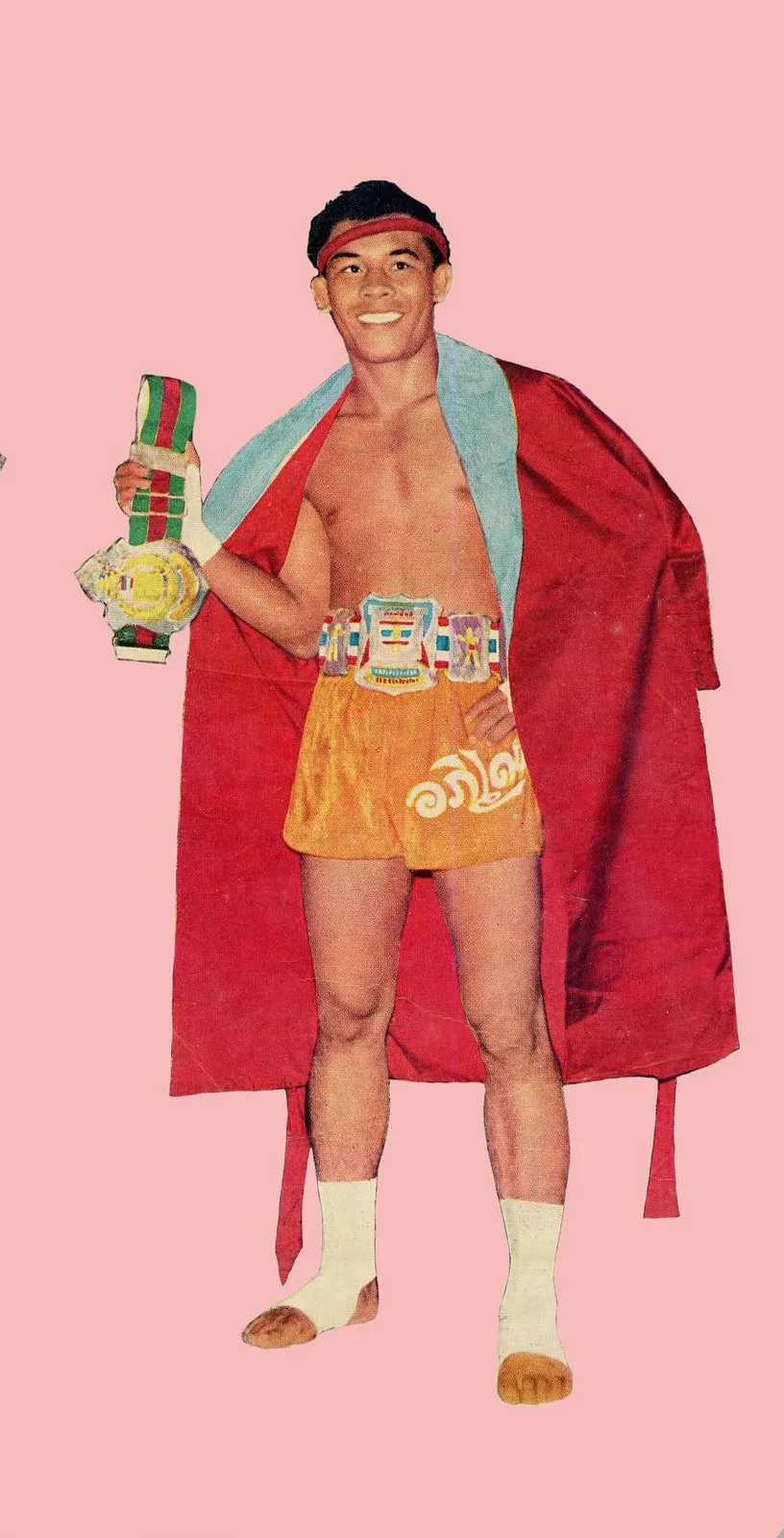
Monarch of Muaythai, 1964. Apidej after winning the epic battle against Dejrit in the historical 3rd encounter, 1964.
Madam Angun said, “He has heavenly blessing, with legs of extraordinary strength since young. He demonstrated that in the football field, showing enormous striking potential.”
The crucial elements in Apidej’s fighting prowess were explosive power, timing of delivery, and the unique ability to solve problems posed by the opposition. Truly was he the master of kicking – especially his flying left (Dhet Bon). Like the skills in football for passing a tackler, use of fake motion, feints, Samba-samba, and psycho tricks are all usable, to produce the bodily artifice that baffles the foe. Shifting of kicks from left to right, or vice-versa, target from low to high, are the norm in muaythai. The difference is in the explosiveness of the delivery after the switch.
Besides ferocity, strength and precision, was the command of his delivery. A rival’s strength could be judged by the fluidity of movement and solidity of his lower bastion fortitude (footwork action plus knee-ups). Apidej shuffled and rolled with his kicking motion, to confuse the opponent, to achieve optimum effect for his strike. He used his feet to attack, confuse, defend, and stall for control of the enemy. When his extended limb is slammed at a target, recoil of the body is executed simultaneously, to transmit the concentration of physical power onto that whiplash motion. The supporting leg, lower back and shoulder muscles provide the immense explosive force behind.
He could knock out his enemy with either hand, had highly effective elbows, and knee-work of awesome strength. Review of his fight record shows there was no style of combat he could not handle. His ring generalship was amongst the best of the best in history.
Falling of the King
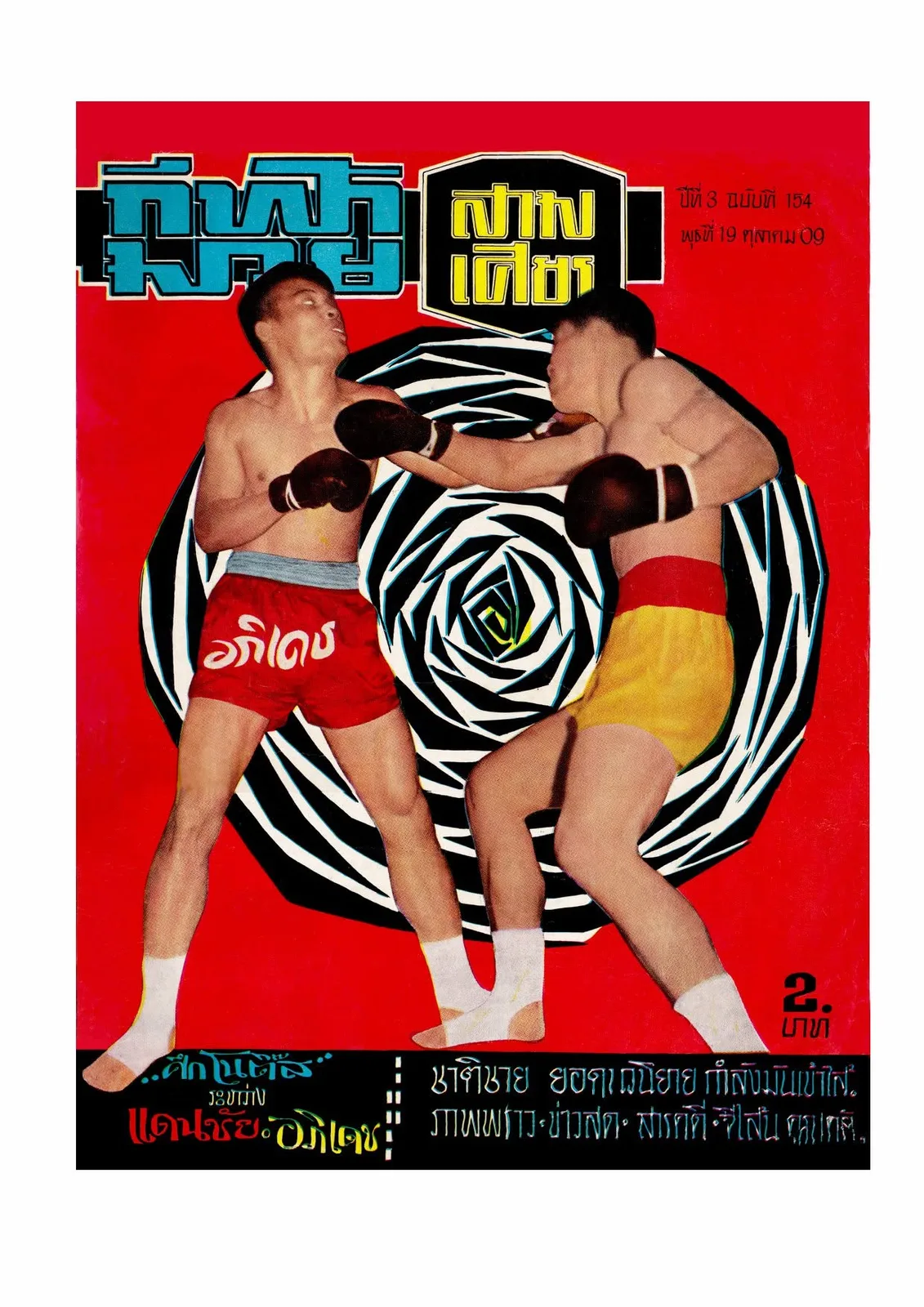
Prelude to Fight of the Year 1966 - Apidej vs. Danchai II.
1966 The fight of the year at Lumpinee Stadium on 18 Octiber, Apidej (147.5) outkicked his old foe-victim “White Tiger” Danchai Ploenchit (143) in the first round, but went down unexpectedly after taken two kicks on his front leg (the exterior and backside of the knee) in the first minute of the second. The astonished audience watched in disbelief as the king of muaythai, face showing agony, sat paralyzed as the referee counted him out. Lady Manager Angun collapsed at ringside.
Suspicions of fraud behind the shocking defeat resulted in the Great Kicker being censured by the Thailand Boxing Commission, and consequently losing six of his stadium and national titles. The humiliation marked the lowest point of his career… The king has fallen, now the entire nation is anxious to see what lies ahead for the disgraced king.
(To be continued)