Copied with permission from Alex Tsui, Muay Thai historian: Alex Tsui's Facebook
The Unforgiving Kicks, part 7 of 10
The Unforgiving Kicks Part VII
26 October 2026 · by Alex Tsui
Written by Alex Tsui, a long-form series of articles on the great kickers of Muay Thai history
The Tiger Shark’s bite
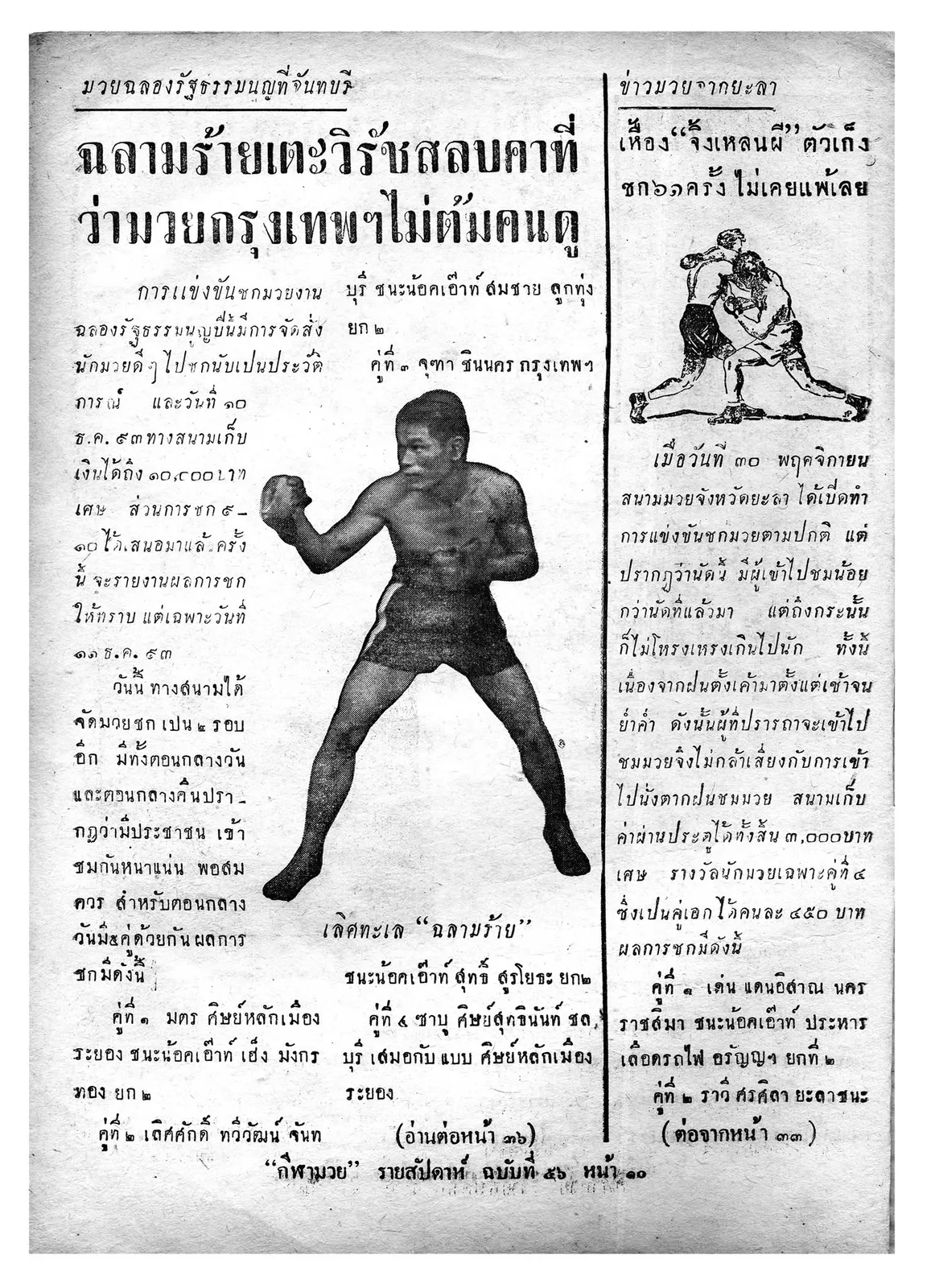
Lertalay Leodrayong KO'd opponent Virat Leodubol in December, 1850. One single high kick in the first round put an end to the fight.
The last notable kick of 1950 was seen on 11 December that year, in the highlight at Chanthaburi’s three-day Constitution Celebration festival, when pre-war hero Lertalay Leodrayong, the old “Tiger Shark”, surprised all by unloosing a lashing left to the ear of Virat Leodubol, in the last minute of the opening round, sending his victim to dreamland.
Golden Era of Heavyweights
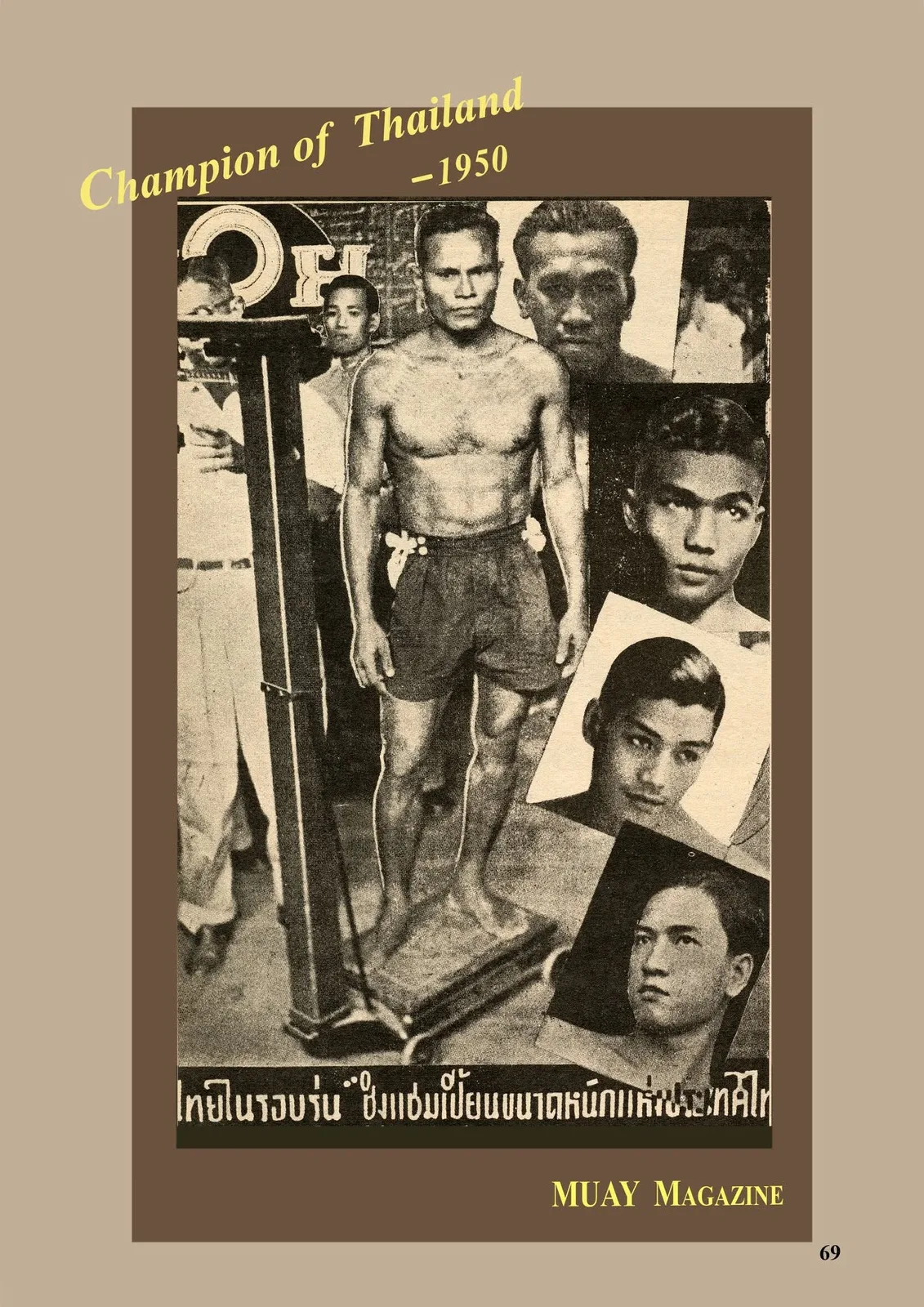
The boxing authority in 1950 was contemplating to stage a national championships for the five most distinguished heavyweights. The project however failed to materialise.
The year 1951 was one hell of a momentous year for the fight game in Thailand. It was a time when heavyweights (actually 140-160 pounders) were popular, and with the great Yaksa Sukh making a return, after being absent since late 1948, and contenders abound, it was a fateful period for the new generation of rising talents, all welters and above, including Surachai, Somdej, Chuchai, Somsri, Sakchai, Prasit and Boonmee, while the old guards like Thavan, Phol, Prasert, and Thongbai were struggling hard to remain in the spotlight. It was the scene of many memorable dramas in sweat and blood.
The UMPS boxing programme, instituted to raise funds for charity at Bangkok’s Thammasart University open ground, was a 3-day package across three weeks in April, 1951. It was a mega show featuring a line-up of the best fighting stars at the time, a composition of the highest level ever seen in the Kingdom of the Yellow Robe.
On the first day, Pluto Somdej Yontarakit upset the most adored Prayut Udomsak, via a shocking kayo in the third round. The latter had been unbeaten for five years, but his nemesis, equally formidable, had only lost once (on a foul) in 18 bouts on the RDN ring, a K.O. artist in the true sense.
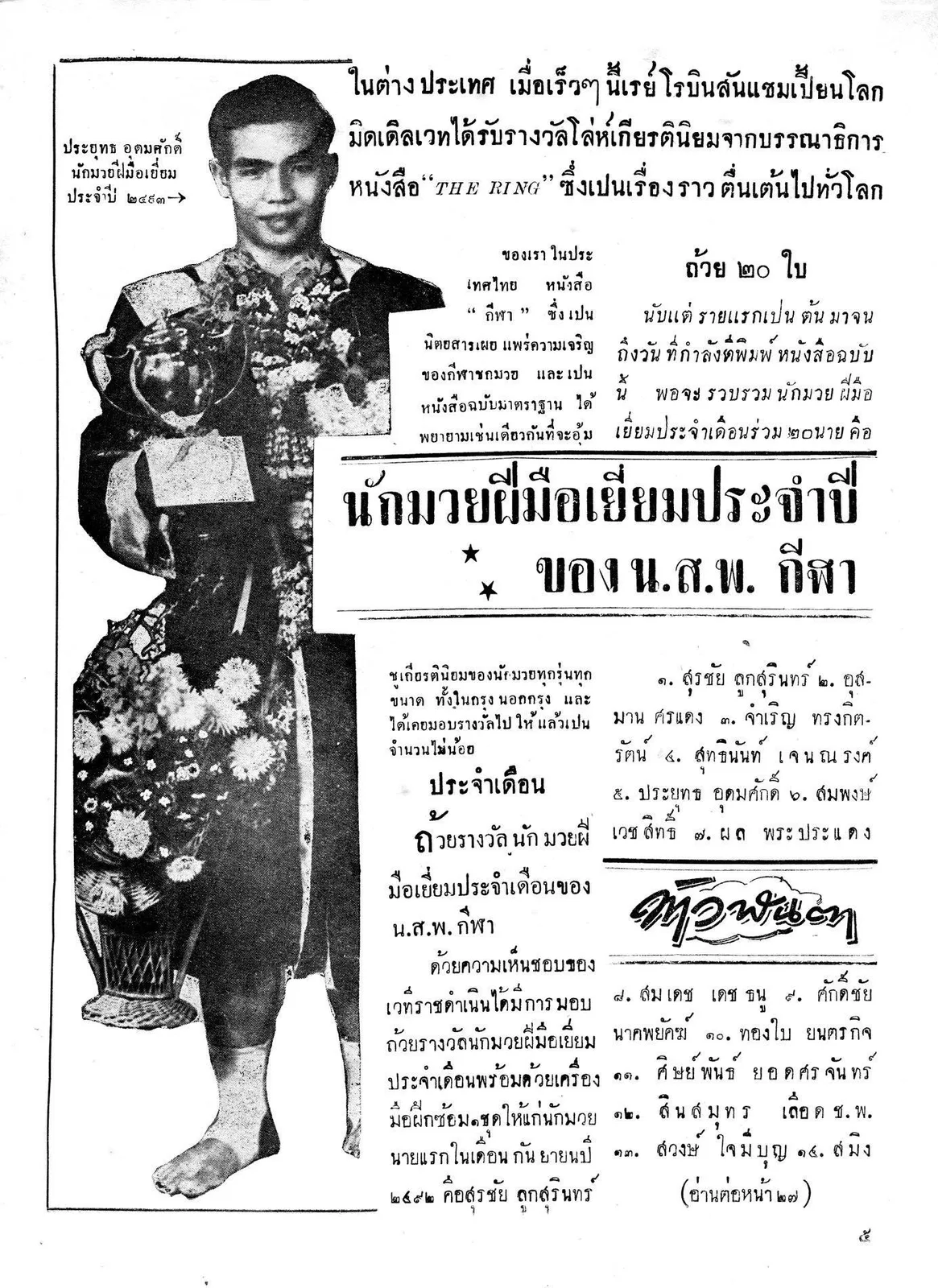
Prayut Udomsak, from Korat, was voted Fighter of the Year 1950, by the most popular Sport Magazine.
That crushing defeat was hard to accept by all, since Prayut was rightly regarded as the most skillful technical stylist at the time. A quick encore staged barely 15 days later ended likewise, a kayo again, but in the fifth, when Somdej, lagging from behind, unexpectedly put him down with one destructive left, again for the full count.
For the humiliating losses, Prayut received a total of 40,000 baht, a huge reward for two outings only 12 days apart.
But the two traumatic setbacks to the most favored boxer of the 50’s, with body built like a horse - hence the nickname Stallion - and the unprecedented status of being the first fighter to receive sports media recognition, as Fighter of the Year in 1950, did raise questions within the boxing circle, as to whether he was still the best-qualified heir to the throne of Champion of Thailand, held by the invincible giant Sukh since 1948.
The epic conflicts at Thammasart University, in April, 1951, did not only change Prayut’s fate for the worse, but also handed the first defeat to long-reigning champion Sukh, fellow townsman to Prayut from Korat.
The old Demon, clearly rusty due to the lay-off, was outfought by a younger, and faster, Surachai, who had won the most spectacular victory of his life, by firing the entire arsenal of kicks, punches, elbows and knees at his disposal, to overcome the abominable giant.
Many expressed the opinion that the old legend was far from being over, as the defeat was evidently attributable to prolonged inactivity, or the fault of slugging against a youthful adversary.
Yet in the realm of boxing politics, the Thammasart programme was an unwelcome event to the RDN management, as the top stars – all groomed by the stadium - had been side-tracked from the plans of the stadium authority. It was business competition not exactly desirable, after all.
Divine battle of the Gods
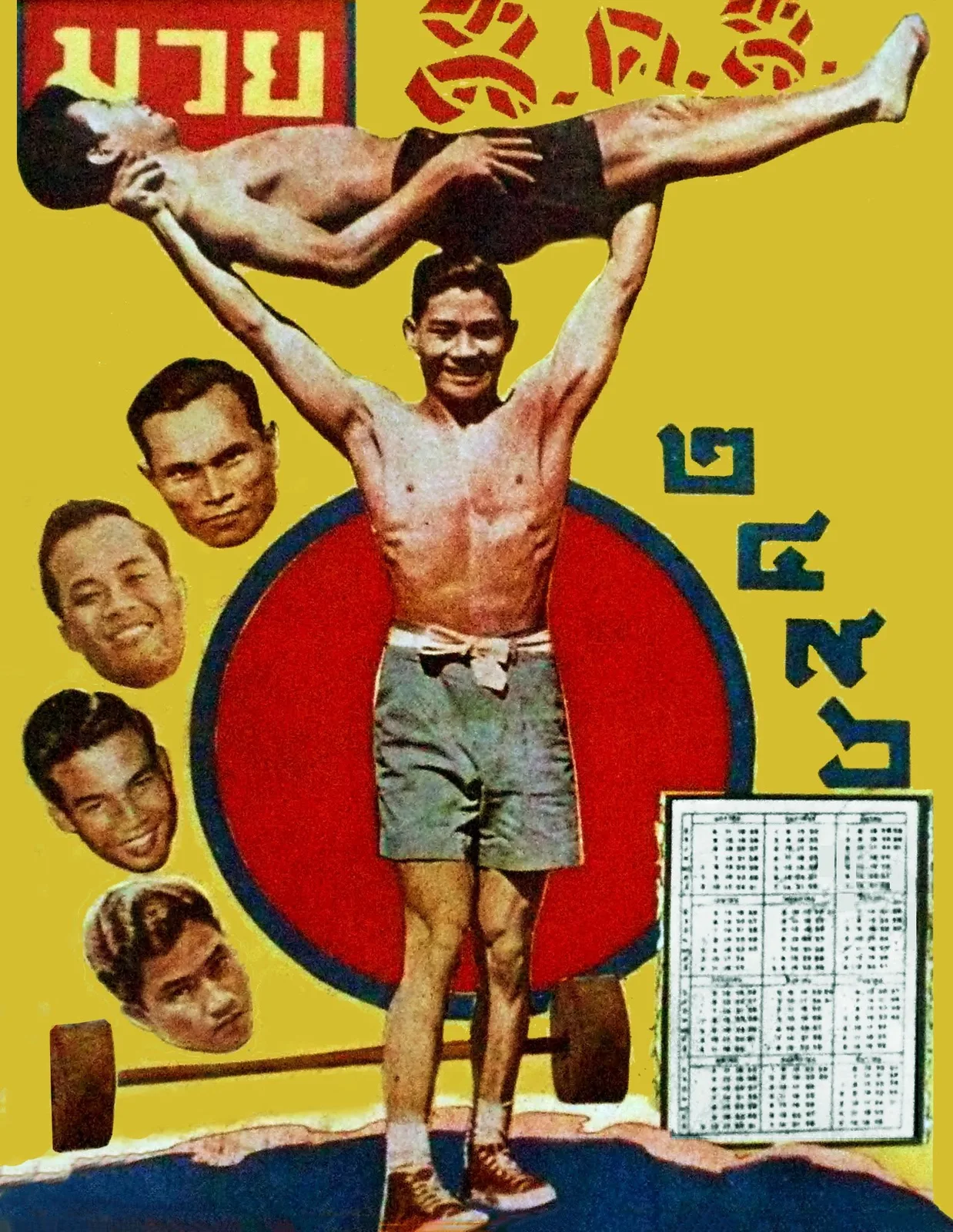
Angel of the Arena, Chuchai, as he showed his form in 1952. The fancy-looking fighter had many talents, in literary and performance arts, besides a potent right fist in the ring.
The month after, on 20 May, 1951, Sukh faced another star, Chuchai, Angel of the Arena and darling to the media for his fancy looks and literary talent on the political front. Though only 26, like the Demon, he had his boxing career interrupted by a lapse of two years since capturing the “8 King-Serpent” tournament title. Critics at large predicted a knockout, or if not, a points win, for the 38-year old powerhouse.
So, it was the Demon versus Angel challenge, and again, it was brute force against youth and vitality. Fans were enthused by the specter of the fearsome Demon coming back to life again, to redeem his former prestige, by destroying the handsome, young hero, Chuchai.
The divine battle of the gods thus unveiled itself, at Rajadamnern Stadium, to attract a profitable gate return of 79,875 baht.
Then again, history took a twist, as Chuchai managed to give the most terrific battle of his life, by employing a well-conceived and superbly-executed game plan, whereby he stubbornly endured the unrelenting onslaught from the aggressor, for the entirety of four rounds, before delivering full-force retaliation in the final heat.
By that strategy, the old Demon was demoralized, fatigued, and totally disorientated, to consequently submit to the first knockout defeat of his career. The victor’s prize was 17,000 Baht, against that of 12,000 for the vanquished.
It was truly a miraculous performance by the Angel, in the stunning demolition of the legendary Sukh after four hellish rounds. Thus ended one of the most outstanding battles in modern muaythai history.
(To be continued)